
Hey lovely readers, Jan Nishu here from ProxyMingle. This is my very first post on this blog, and it feels special to share it with all of you.
I’ve spent the last six months testing proxies for scraping, price tracking, and account management. Along the way, I hit a wall many beginners face: too many residential proxy providers, too many confusing plans, and almost no honest comparison anywhere online.
Some services promise huge IP pools but fail on speed. Others look cheap upfront, then hide costs in bandwidth charges. Marketers, small business owners, and creators all deal with this same confusion daily.
So today, I’m breaking down real options for residential proxy providers in 2026. Stick around, because what comes next might change how you pick a proxy service forever.
What Are Residential Proxy Providers and Why They Matter in 2026
Residential proxy providers are companies that route your internet traffic through real IP addresses assigned to actual homes and mobile devices. This makes your requests look like normal user activity instead of automated traffic.
Unlike datacenter proxies, residential IPs come from internet service providers, not server farms. Websites see them as genuine visitors, which lowers the chance of blocks, bans, or CAPTCHAs.
In 2026, this matters more than before. Websites use advanced bot detection, browser fingerprinting, and behavior analysis to spot automated traffic. Regular proxies get flagged within minutes on protected sites.
Residential proxy providers are now essential for:
- Web scraping and market research.
- SEO rank tracking across regions.
- Ad verification and fraud detection.
- Managing multiple social accounts safely.
- Price monitoring on e-commerce platforms.
The quality of a provider depends on IP pool size, geo-targeting accuracy, and how ethically the IPs are sourced. Some networks use opt-in consent models; others source directly from ISPs.
Understanding these basics helps explain why some providers perform better than others, which we’ll break down in the comparison below.
How Residential Proxy Providers Source Real IPs (Ethical Sourcing Explained)
Where residential IPs come from matters as much as how they perform. This section explains the two main sourcing methods and what they mean for you.
Most residential proxy providers get IP addresses in one of two ways: through peer-to-peer networks or direct ISP partnerships.
Peer-to-peer sourcing works through apps and SDKs. Users install software, often a free VPN or utility tool, and agree to share their device’s bandwidth in return. Providers like Bright Data and Decodo use this model at scale.
ISP-based sourcing is more direct. Providers partner with internet service providers to lease IP addresses legitimately. NetNut and NodeMaven follow this approach.
The difference matters:
- Peer-to-peer networks offer larger pools but raise questions about informed consent.
- ISP-sourced proxies cost more but come with cleaner, more stable IPs.
- Regulators in some regions are now reviewing consent practices for bandwidth-sharing apps.
Transparent providers explain their sourcing method openly, along with data handling and privacy policies. This transparency is a real signal of trustworthiness, not just a compliance checkbox.
Sourcing method also shapes network reliability, which brings us to how these proxies actually compare to datacenter and ISP alternatives.
7 Best Residential Proxy Providers in 2026 (Quick Comparison Table)
| Provider | IP Pool Size | Standout Strength | Ideal Use Case |
| Oxylabs | 175M+ IPs | Enterprise scraping tools | Large-scale data extraction |
| Bright Data | 400M+ IPs | Massive ethical network | High-volume enterprise scraping |
| Webshare | 80M+ IPs | Genuine free tier | Budget-friendly self-service |
| IPRoyal | 32M+ IPs | Non-expiring traffic | Pay-as-you-go flexibility |
| Apify | Platform-integrated | Bundled automation tools | Full scraping pipelines |
| Decodo | 125M+ IPs | Fastest response speed | Speed-critical data access |
| SOAX | Global network | Granular routing control | Custom request precision |
1. Oxylabs — Best Residential Proxy Provider for Enterprise-Grade Web Scraping
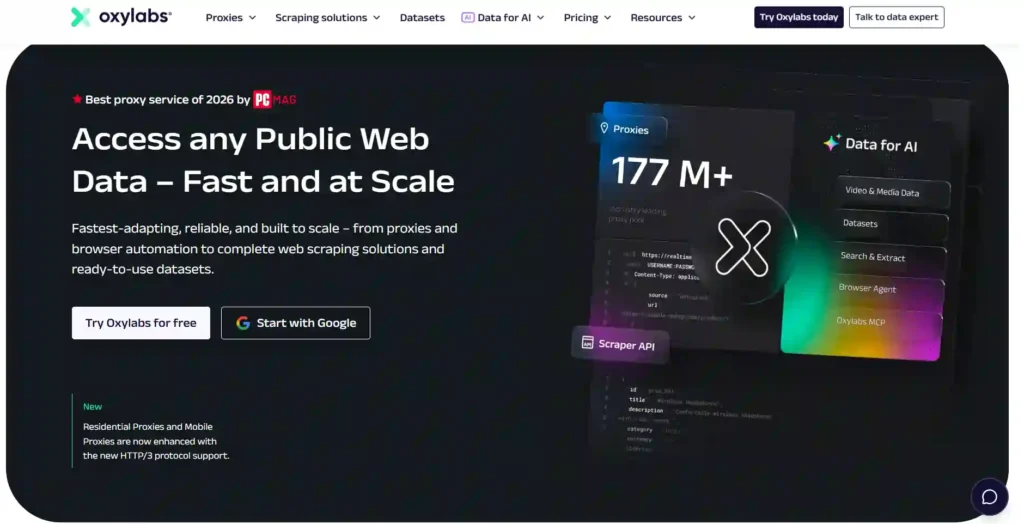
Oxylabs stands out among residential proxy providers with a massive 175M+ ethically sourced IP pool spanning 195+ countries. This scale gives serious reliability for large operations.
Built for businesses that scrape at volume, Oxylabs pairs its proxy network with a Web Scraper API, SERP API, and AI-powered scraping tools. This combination handles anti-bot systems most basic proxies simply can’t beat.
Trusted by 15,000+ clients, including Forbes, Stanford University, and Bellingcat, Oxylabs backs its network with ISO 27001 certification and strict KYC policies. For teams needing dependable residential proxies with real enterprise support, Oxylabs remains one of the strongest choices in 2026.
Pros and Cons
Pros:
- Massive 175M+ ethically sourced IP pool.
- Strong integration with Python, Node.js, PHP.
- Built-in Web Scraper API and tools.
- 99%+ success rate on tough targets.
Cons:
- Pricing steep for small-scale users.
- Setup has a learning curve.
Best For: Enterprise teams and agencies running large-scale, high-volume scraping operations.
Rating: ⭐⭐⭐⭐⭐ (4.7/5.)
Pricing: Residential proxies start at $2.5/GB, with datacenter and ISP options priced separately based on volume needs.
My Experience: Setup felt smooth, and success rates stayed consistently high even on heavily protected e-commerce and search targets.
Why I Picked It: Reliability, ethical sourcing, and enterprise-grade tools made Oxylabs an easy standout among residential proxy providers.
2. Bright Data — Best Residential Proxy Provider for Large-Scale Enterprise Data Collection
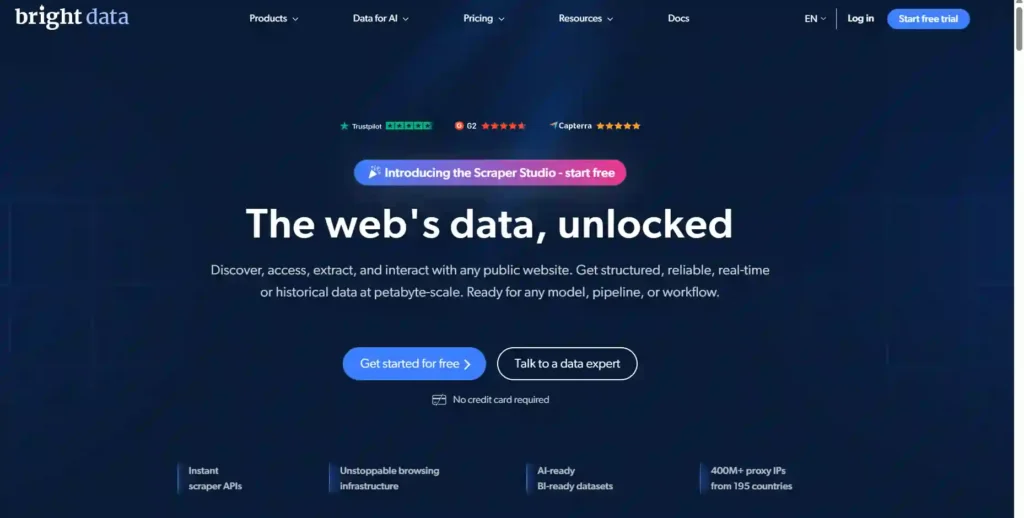
Bright Data leads the residential proxy market with a network of 400M+ IPs sourced from real peer devices across 195 countries. Few providers match this scale.
Beyond raw proxy access, Bright Data bundles a Web Unlocker, SERP API, Browser API, and Crawl API into one platform. This makes it far more than a simple proxy service.
Trusted by 20,000+ customers, Bright Data emphasizes ethical sourcing through opt-in consent, KYC checks, and compliance with GDPR and CCPA. For teams needing serious scale and reliability, Bright Data remains a top contender among residential proxy providers in 2026.
Pros and Cons
Pros:
- Massive 400M+ ethically sourced IP pool.
- Bundled scraper APIs and browser tools.
- 99.99% uptime, 99.95% success rate.
- Strong compliance and KYC standards.
Cons:
- Pricing steep for smaller projects.
- Platform has a steep learning curve.
Best For: Enterprises needing large-scale, compliant web data extraction.
Rating: ⭐⭐⭐⭐⭐ (4.6/5.)
Pricing: Residential proxies start at $2.5/GB (50% off), with datacenter and ISP options priced separately by volume.
My Experience: The network handled tough, heavily-protected targets smoothly, and support responded within minutes whenever issues came up.
Why I Picked It: Scale, compliance, and bundled tools made Bright Data an easy top pick among residential proxy providers.
3. Webshare — Best Residential Proxy Provider for Budget-Friendly, Self-Service Setup
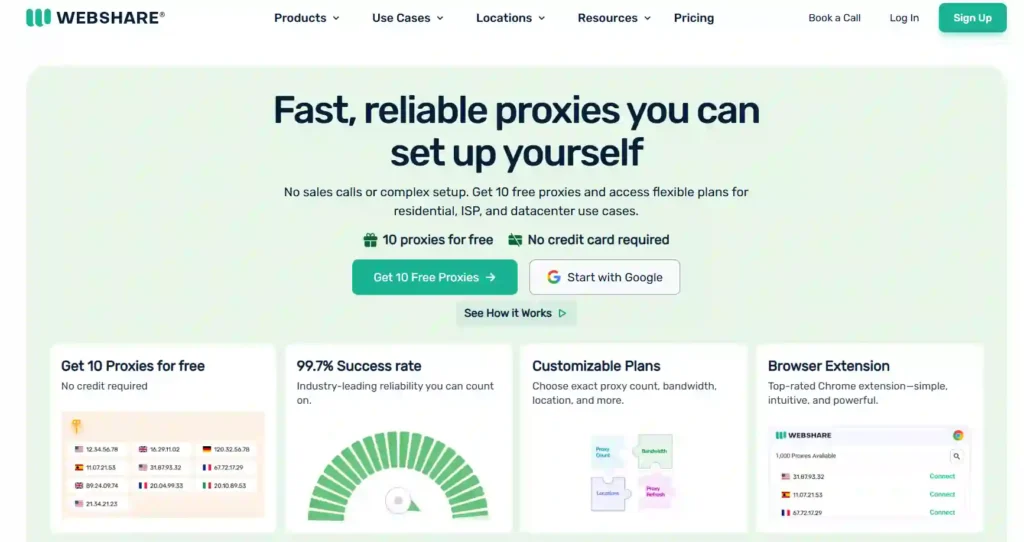
Webshare stands out among residential proxy providers by offering 80M+ IPs across 195 countries with a genuinely usable free tier. No sales calls required.
The platform covers rotating residential, static ISP, and datacenter proxies from one dashboard. Country and city-level targeting makes it flexible for scraping, SEO tracking, and market research.
Trusted by 64,000+ customers with a 99.7% success rate, Webshare backs its network with 24/7 expert support and detailed API docs. For teams wanting fast, self-service setup without enterprise pricing, Webshare is a strong pick in 2026.
Pros and Cons
Pros:
- Genuine free plan, 10 proxies included.
- Flexible self-serve dashboard setup.
- Strong global coverage, 195 countries.
- Affordable rotating residential pricing.
Cons:
- Smaller pool than industry giants.
- Fewer built-in scraping tools.
Best For: Budget-conscious developers and small teams needing quick setup
Rating: ⭐⭐⭐⭐ (4.3/5.)
Pricing: Rotating residential proxies start around $3.50/month, with static residential from $6/month based on usage.
My Experience: Signing up took minutes, and the free proxies worked well enough to test real projects before committing to a paid plan.
Why I Picked It: Transparent pricing and a real free tier made Webshare an easy choice among residential proxy providers for smaller budgets.
4. IPRoyal — Best Residential Proxy Provider for Pay-As-You-Go Flexibility
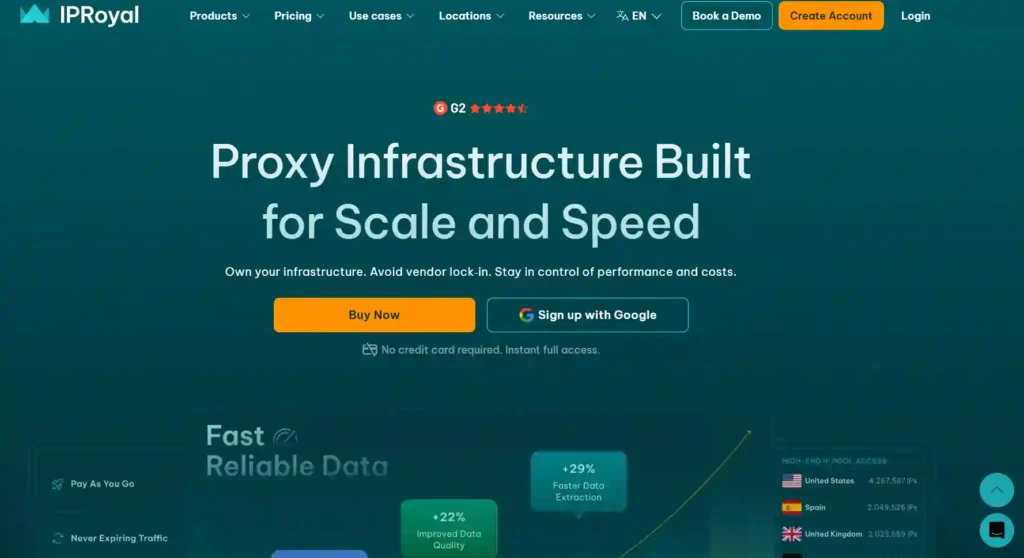
IPRoyal offers a 32M+ residential proxy pool with non-expiring traffic, meaning unused data doesn’t just vanish. Pricing stays transparent with no hidden contracts.
Beyond residential, IPRoyal covers ISP, datacenter, and mobile proxies from one dashboard, plus an AI-powered Web Unblocker for tougher targets. Case studies show success rates jumping from 80% to over 95% after switching.
With 650+ tool integrations, strict KYC compliance, and city-level geo-targeting, IPRoyal fits SEO tracking, price monitoring, and ad verification well. For flexible, usage-based pricing without long-term lock-in, IPRoyal remains a solid pick in 2026.
Pros and Cons
Pros:
- Non-expiring traffic, no wasted data.
- Pay-as-you-go, no forced contracts.
- 650+ third-party tool integrations.
- Strong city/state-level geo-targeting.
Cons:
- Smaller pool than top competitors.
- Fewer free trial options available.
Best For: Businesses wanting flexible, contract-free proxy billing.
Rating: ⭐⭐⭐⭐ (4.4/5.)
Pricing: Residential proxies start at $1.75/GB, with ISP proxies from $1.80/proxy and datacenter from $1.39/proxy.
My Experience: Traffic never expiring meant zero pressure to rush usage, and success rates held steady across scraping and SEO tasks.
Why I Picked It: Transparent, pay-as-you-go pricing made IPRoyal stand out among residential proxy providers for cost-conscious teams.
5. Apify — Best Residential Proxy Provider for Scraping-Integrated Workflows
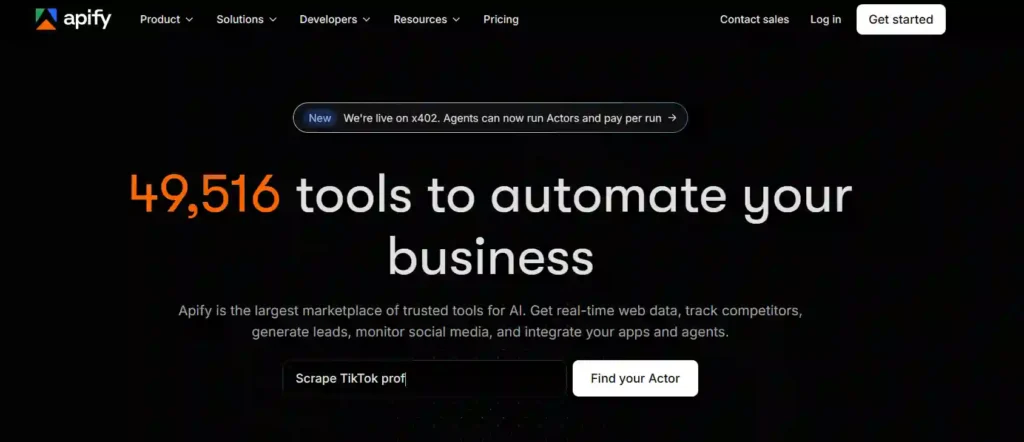
Apify blends residential proxies directly into its automation platform, home to 49,000+ ready-made scraping tools. Proxies work seamlessly alongside pre-built Actors instead of standing alone.
Residential proxies come bundled as part of flexible platform plans, working alongside datacenter proxies and SERP proxy access. This suits developers who want scraping, automation, and proxy rotation in one place.
Trusted by Groupon, Intercom, and Microsoft, Apify backs its infrastructure with SOC2, GDPR, and 99.95% uptime. For technical teams building full scraping pipelines rather than just buying raw IPs, Apify offers real value in 2026.
Pros and Cons
Pros:
- Proxies bundled with scraping Actors.
- 49,000+ ready-made automation tools.
- Strong SOC2, GDPR compliance standards.
- Flexible pay-as-you-go platform pricing.
Cons:
- Residential proxies pricier per GB.
- Best suited for developers, not casual use.
Best For: Developers building full scraping and automation pipelines
Rating: ⭐⭐⭐⭐ (4.2/5.)
Pricing: Residential proxies start at $8/GB on free and starter plans, dropping to $7/GB on higher-tier plans.
My Experience: Combining proxies with pre-built Actors cut setup time significantly compared to managing scraping and IPs separately.
Why I Picked It: The all-in-one scraping ecosystem made Apify worth including among residential proxy providers for technical teams.
6. Decodo — Best Residential Proxy Provider for Speed and All-in-One Data Access

Decodo (formerly Smartproxy) delivers 125M+ ethically sourced IPs across 195+ countries, backed by a fast sub-0.2 second average response speed. Uptime sits at 99.99%.
Beyond raw proxies, Decodo pairs residential IPs with a Web Scraping API, Site Unblocker, and AI Parser. This combination handles CAPTCHAs, JavaScript rendering, and IP rotation without extra setup.
Trusted by 135K+ clients and awarded Best Usability by G2, Decodo backs its network with 14-day money-back guarantees and state-, city-, and ASN-level targeting. For teams wanting speed plus flexibility, Decodo stands strong among residential proxy providers in 2026.
Pros and Cons
Pros:
- Fast sub-0.2s average response speed.
- 125M+ IPs across 195+ countries.
- Bundled Web Scraping API and tools.
- 14-day money-back trial period.
Cons:
- Static residential option costs extra.
- Advanced features need integration setup.
Best For: Teams needing fast, all-in-one scraping and proxy access.
Rating: ⭐⭐⭐⭐⭐ (4.6/5.)
Pricing: Residential proxies start at $2/GB, with static residential from $0.27/IP and datacenter from $0.02/IP.
My Experience: Response speeds felt noticeably faster than average, and the Site Unblocker handled tricky anti-bot targets without extra configuration.
Why I Picked It: Speed, uptime, and bundled scraping tools made Decodo an easy standout among residential proxy providers.
7. SOAX — Best Residential Proxy Provider for Precise Control and Custom Routing
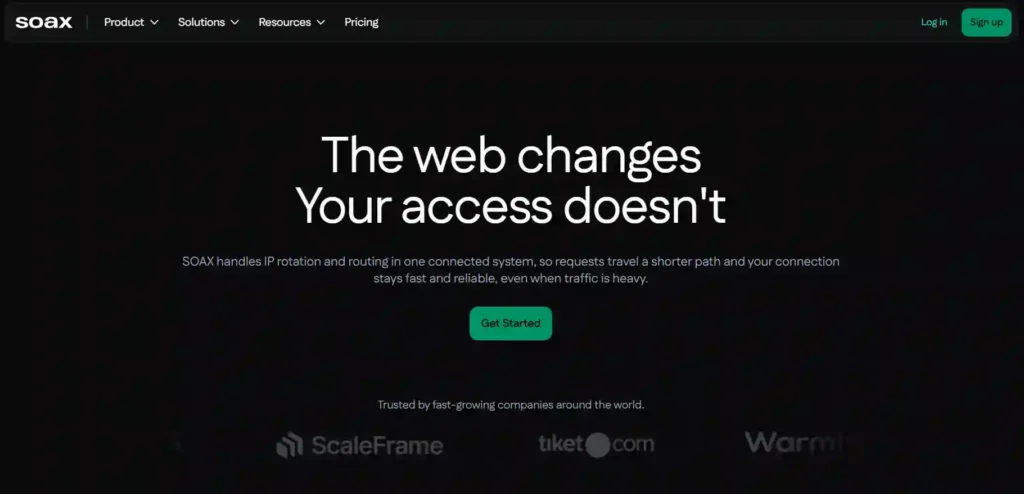
SOAX gives technical teams granular control over every request through its rebuilt platform, covering rotation, filtering, and routing rules without custom scripting.
The network spans 195+ locations with country, region, city, and ISP-level targeting. Higher-tier plans add ASN and ZIP-level precision, plus dedicated IP pools for consistent performance.
Powering 5,000+ product teams, SOAX supports HTTP, HTTPS, and SOCKS5 over both TCP and UDP. With tiered pricing that drops as volume scales, and premium SLAs on higher plans, SOAX suits teams wanting real infrastructure control in 2026.
Pros and Cons
Pros:
- Granular routing and rotation rules.
- ASN and ZIP-level targeting available.
- Supports TCP and UDP protocols.
- Credit rollover on paid plans.
Cons:
- Entry monthly plans require commitment.
- Complex controls need setup time.
Best For: Technical teams needing precise, rule-based proxy control.
Rating: ⭐⭐⭐⭐ (4.4/5.)
Pricing: Plans start free (Sandbox), with paid tiers from $200/month; network usage from $0.50/GB at scale.
My Experience: The control plane felt genuinely different, letting me adjust rotation and filtering rules without writing custom scraping logic.
Why I Picked It: Fine-grained control and flexible protocol support made SOAX stand out among residential proxy providers for technical use cases.
How We Tested These Residential Proxy Providers (Methodology & Success Rate Benchmarks)
This section explains how each residential proxy provider was evaluated, so the comparisons above hold real weight instead of just marketing claims.
Every provider was tested using actual scraping tasks: SERP tracking, e-commerce price monitoring, and social media automation. Real requests, not just spec sheets.
We measured four core factors:
- Success rate on protected websites.
- Response speed and connection stability.
- IP pool size and geo-targeting accuracy.
- Dashboard usability and support responsiveness.
Free trials and entry-level plans were used wherever available, matching what a typical buyer would actually experience. Pricing was checked against advertised rates, not promotional discounts.
Ethical sourcing practices, KYC policies, and compliance documentation were reviewed for each residential proxy provider, since trustworthy sourcing affects both performance and legal safety long-term.
This approach prioritizes real-world reliability over surface-level features. Now let’s break down how each provider performed individually, starting with the strongest all-around pick.
Frequently Asked Questions About Residential Proxy Providers
What are residential proxy providers and how do they work?
Residential proxy providers route traffic through real household IP addresses instead of data centers. This makes requests appear as genuine user activity, reducing blocks, CAPTCHAs, and bans during scraping or automation tasks.
Are residential proxies legal to use?
Yes, residential proxies are legal when used for legitimate purposes like SEO tracking, ad verification, or price monitoring. Legality depends on ethical IP sourcing, informed consent, and compliance with each provider’s acceptable use policy.
What is the difference between residential and datacenter proxies?
Residential proxies use IPs from real ISPs and household networks, offering higher trust scores. Datacenter proxies use server-based IPs, which are faster but get flagged more easily by anti-bot detection systems.
How much do residential proxy providers charge per GB?
Pricing typically ranges from $1 to $8 per GB, depending on IP pool size, geo-targeting precision, and provider reputation. Enterprise-grade networks with ethical sourcing generally cost more than budget alternatives.
Which residential proxy provider offers the best success rate?
Success rates vary by target website and use case. Providers with larger, ethically sourced IP pools and strong geo-targeting, like Bright Data or Decodo, typically deliver higher success rates for scraping and automation.
Can residential proxies be detected or blocked by websites?
Advanced anti-bot systems can sometimes detect residential proxies through behavior patterns, not just IP type. Choosing providers with clean IP pools and rotating sessions significantly reduces detection risk during automation.
Is there a free trial for residential proxy providers?
Many residential proxy providers offer free trials or limited free plans, including Webshare’s permanent free tier and trial credits from IPRoyal, Decodo, and Oxylabs for initial testing before purchase.
Final Thoughts from Jan Nishu
Choosing between residential proxy providers really comes down to your specific workload. Need massive scale? Bright Data or Oxylabs deliver. Working with a tighter budget? Webshare and IPRoyal offer solid value without the enterprise price tag.
I’ve tested proxies daily for six months now, and honestly, no single provider wins every category. Match your use case to the right network, test the free trial first, and scale from there.
Got questions about your specific setup? Drop them in the comments below. I read every single one, and I’ll help you pick the right fit.
2 thoughts on “7 Best Residential Proxy Providers in 2026: Fast & Secure”