

Hey everyone, Jan Nishu here from ProxyMingle. Six months ago, testing proxy tools felt confusing. Vietnam-based servers kept failing, slowing down, or getting blocked mid-task.
Anyone working with automation, scraping, or region-locked content knows this pain. Vietnam proxy providers all promise speed and stability, but real performance rarely matches the claims on their pricing pages.
After months of hands-on testing across different networks, patterns started showing up. Some providers held strong under pressure. Others quietly dropped connections at the worst possible moment.
What actually separates a reliable Vietnam proxy service from a risky one? Marketers, developers, and beginners alike deserve clarity before spending money.
Here’s what six months of daily testing revealed.
What Are Vietnam Proxy Providers and How Do They Work?
Vietnam proxy providers give users a Vietnamese IP address by routing internet traffic through servers located inside the country. This makes any device appear as if it’s browsing from Hanoi, Ho Chi Minh City, or another Vietnamese location, even when the user is somewhere else entirely.
The process works through an intermediary server. A request first passes through the Vietnam proxy, which assigns a local IP before connecting to the target website. The site then responds as if the visitor were physically in Vietnam.
Providers typically offer a few proxy types:
- Residential proxies – IPs tied to real Vietnamese internet service providers.
- Datacenter proxies – faster, non-residential IPs built for speed.
- ISP proxies – a mix of residential authenticity and datacenter stability.
- Mobile proxies – IPs from Vietnamese carriers like Viettel or Vinaphone.
These proxies support common use cases like accessing geo-restricted content, running market research, and managing region-specific accounts. Choosing the right type depends on the task at hand.
Understanding these fundamentals makes it easier to compare providers based on actual performance rather than marketing claims. That’s exactly what the next section breaks down.
How We Tested and Ranked These Vietnam Proxy Providers
Choosing a Vietnam proxy provider isn’t just about price. Real performance depends on speed, reliability, and how well a provider handles Vietnamese IP targeting under actual working conditions.
To rank these providers fairly, we evaluated them against consistent criteria rather than marketing claims.
Core testing factors included:
- Connection speed – response times during typical browsing and scraping tasks.
- IP pool size and authenticity – whether IPs are genuinely Vietnamese and tied to real ISPs like Viettel, VNPT, or FPT.
- Uptime and success rate – how consistently each proxy stayed connected without dropping.
- Geo-targeting accuracy – ability to target specific cities like Hanoi or Ho Chi Minh City.
- Anti-detection performance – how well proxies avoided blocks during repeated requests.
- Pricing transparency – clear cost structure without hidden fees.
Each provider was also assessed on ease of setup, protocol support (HTTP, HTTPS, SOCKS5), and customer support responsiveness.
Providers that showed inconsistent speeds, unclear pricing, or weak Vietnamese IP coverage were ranked lower, regardless of brand reputation.
This approach keeps the comparison grounded in usability rather than promotional language. With the methodology clear, here’s how each provider stacks up against these standards.
6 Best Vietnam Proxy Providers Reviewed
| Best Vietnam Proxy Providers | Protocol Support | Session Type | Standout Tech Feature |
| Oxylabs | HTTP, HTTPS, SOCKS5 | Rotating & sticky | AI-powered anti-blocking |
| Webshare | HTTP, SOCKS5 | Rotating & static | Chrome proxy extension |
| Bright Data | HTTP, HTTPS, SOCKS5 | Rotating & sticky | Integrated Proxy Manager |
| IPRoyal | HTTP, SOCKS5 | Rotating & sticky | Non-expiring traffic |
| NodeMaven | HTTP, SOCKS5 | Sticky up to 7 days | Real-time IP filtering |
| Apify | HTTP, SOCKS5 | Rotating (Actor-based) | Built-in scraping Actors |
1. Oxylabs — Vietnam Proxy Provider Review
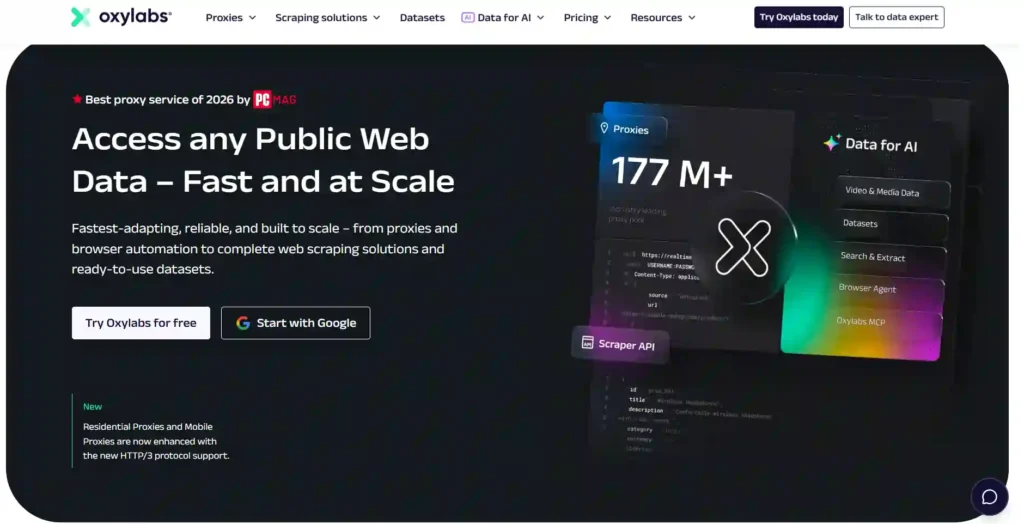
Oxylabs stands out as one of the most established names in the Vietnam proxy space, offering residential, datacenter, ISP, and mobile proxies built for serious data work.
With over 3.6 million Vietnamese IPs and city-level targeting across Hanoi, Ho Chi Minh City, and beyond, it handles everything from e-commerce scraping to SEO tracking with ease.
What makes Oxylabs different is the infrastructure behind it. Enterprise-grade reliability, near-instant response times, and consistent uptime make it a dependable choice for teams that can’t afford failed requests.
It’s not the cheapest option, but for anyone prioritizing scale, accuracy, and long-term stability, Oxylabs delivers where lighter providers often struggle.
Pros and Cons
✅ Pros:
- Massive Vietnamese IP pool available.
- Reliable uptime under heavy usage.
- Strong city-level geo-targeting accuracy.
- Enterprise-grade infrastructure and support.
❌ Cons:
- Higher pricing than budget providers.
- Steeper learning curve for beginners.
💰 Pricing: Residential proxies start from $8/GB, with ISP and datacenter options priced separately based on usage needs.
🎯 Best For: Enterprise teams needing scalable Vietnamese data
⭐ Rating: 4.5/5 stars
🗣️ My Experience: Testing Oxylabs for Vietnam-based scraping felt smooth from setup to execution, with minimal blocks even during high-volume sessions.
🤔 Why Choose Oxylabs: Reliable performance, genuine Vietnamese IPs, and enterprise support make it worth the investment for demanding projects.
2. Webshare — Vietnam Proxy Provider Review
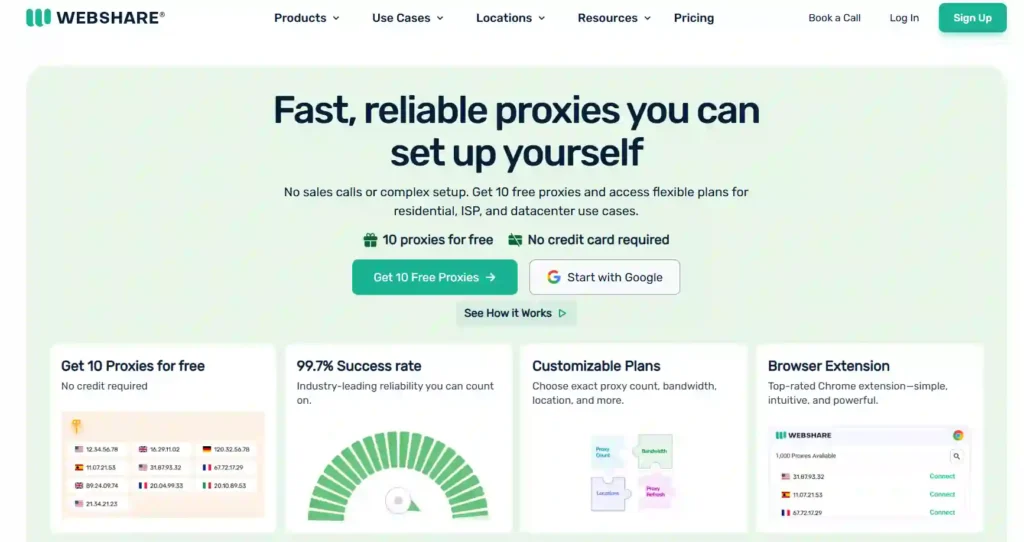
Webshare is the go-to choice for budget-conscious users who still want dependable Vietnamese proxy access. It offers 10 free proxies with no credit card required, making it the easiest zero-cost entry point on this list.
Beyond the free tier, Webshare covers datacenter, static residential, and rotating residential proxies with strong uptime and simple self-service setup.
What makes Webshare appealing is how approachable it feels. There’s no sales call, no complicated onboarding, just a dashboard, clear pricing, and instant access to proxies.
For beginners testing Vietnamese IP access or small teams running lighter tasks, Webshare delivers solid reliability without the enterprise price tag.
Pros and Cons
✅ Pros:
- Free tier with no credit card.
- Beginner-friendly self-service setup.
- Affordable rotating residential pricing.
- Responsive 24/7 expert support.
❌ Cons:
- Smaller IP pool than rivals.
- Limited advanced enterprise features.
💰 Pricing: Datacenter proxies start from $2.99/month, with residential plans from $6/month depending on usage.
🎯 Best For: Beginners and budget users needing light tasks.
⭐ Rating: 4.3/5 stars.
🗣️ My Experience: Setting up Webshare took minutes, and the free proxies worked well enough for testing before committing to a paid plan.
🤔 Why Choose Webshare: Zero-cost entry, simple setup, and honest pricing make it ideal for beginners exploring Vietnamese proxies.
3. Bright Data — Vietnam Proxy Provider Review
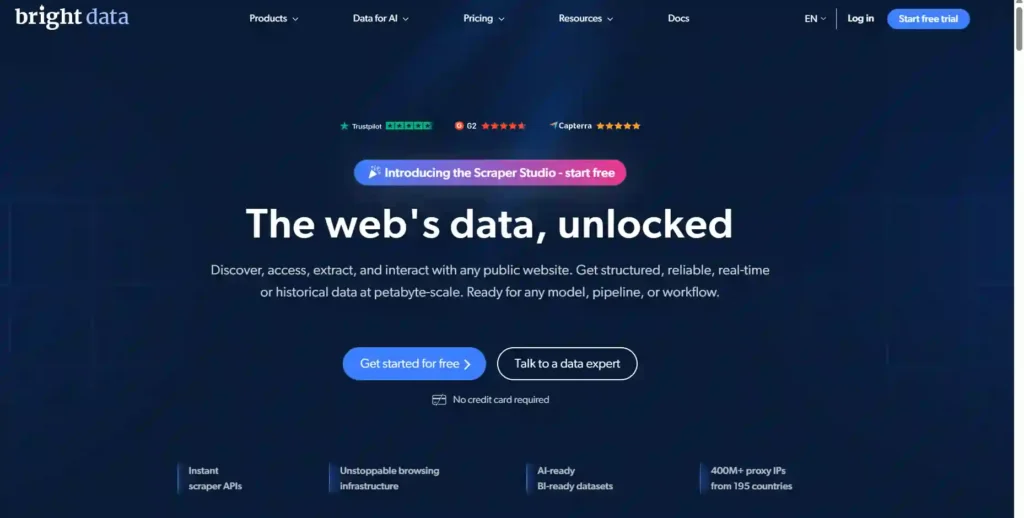
Bright Data is widely recognized as one of the largest and most established proxy networks globally, and its Vietnam coverage reflects that scale. With 400M+ residential IPs worldwide and dedicated ISP and datacenter options, it supports Vietnamese IP targeting for serious data operations.
Businesses use Bright Data for Vietnamese e-commerce scraping, ad verification, and market research where blocks simply aren’t an option.
What sets Bright Data apart is its infrastructure and compliance standards. With 99.99% uptime, ethically sourced IPs, and a dedicated compliance team, it’s built for teams that need scale without legal grey areas.
It’s a premium option, best suited for enterprises and data-heavy operations rather than casual users.
Pros and Cons
✅ Pros:
- Massive global residential IP network.
- Enterprise-grade uptime and reliability.
- Strong compliance and ethical sourcing.
- 24/7 expert support available always.
❌ Cons:
- Expensive for small-scale users.
- Complex setup for absolute beginners.
💰 Pricing: Residential proxies start from $2.5/GB (50% off), with datacenter from $0.9/IP and ISP from $1.3/IP.
🎯 Best For: Enterprises needing large-scale Vietnamese data.
⭐ Rating: 4.6/5 stars.
🗣️ My Experience: Running Vietnamese scraping tasks on Bright Data felt seamless, with almost zero blocks even during high-volume requests.
🤔 Why Choose Bright Data: Unmatched scale, ethical sourcing, and enterprise reliability make it a trusted pick for demanding projects.
4. IPRoyal — Vietnam Proxy Provider Review
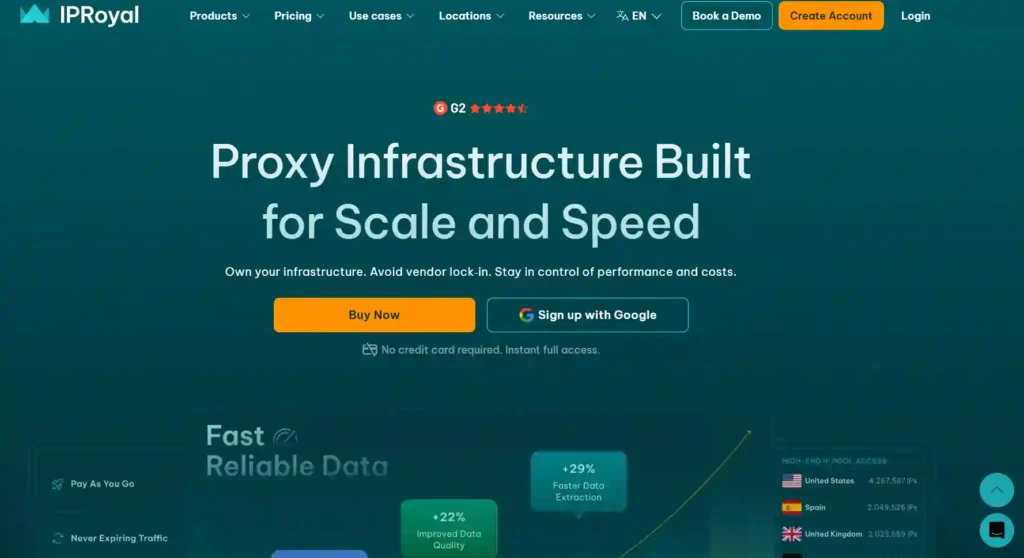
IPRoyal offers a solid mix of residential, ISP, datacenter, and mobile proxies, with over 460,000 Vietnamese IPs available for scraping, market research, and geo-targeted browsing.
What stands out is the pricing model. Traffic doesn’t expire, there are no forced contracts, and pay-as-you-go options make it flexible for both small projects and larger operations.
IPRoyal also supports city-level Vietnamese targeting, useful for tasks like SERP tracking on Google.com.vn or monitoring local e-commerce pricing across regions.
With 650+ tool integrations and strong KYC-backed compliance, it fits teams that want control without vendor lock-in or hidden fees.
Pros and Cons
✅ Pros:
- Non-expiring traffic and flexible plans.
- Strong city-level Vietnamese targeting.
- 650+ tool integrations supported.
- Transparent, pay-as-you-go pricing.
❌ Cons:
- Smaller network than top rivals.
- Mobile proxies priced per day.
💰 Pricing: Residential proxies start from $1.75/GB, with ISP from $1.80/proxy and datacenter from $1.39/proxy.
🎯 Best For: Businesses needing flexible, non-expiring Vietnamese proxy access
⭐ Rating: 4.4/5 stars
🗣️ My Experience: IPRoyal’s dashboard felt straightforward, and traffic not expiring made testing Vietnamese targets far less stressful.
🤔 Why Choose IPRoyal: Flexible pricing, real Vietnamese coverage, and no vendor lock-in make it a dependable, budget-friendly pick.
5. NodeMaven — Vietnam Proxy Provider Review
NodeMaven takes a different approach to Vietnam proxy access by focusing on IP quality over sheer pool size. Instead of dumping unscreened IPs on users, it filters addresses in real time, keeping fraud scores low and success rates high.
With 30M+ residential and 250K+ mobile IPs across 190 countries, Vietnamese targeting benefits from the same quality-first filtering that powers its multi-accounting and automation use cases.
What makes NodeMaven stand out is its cashback system, turning unused traffic into reusable credits, plus sticky sessions lasting up to seven days for stable, long-running tasks.
It’s a strong fit for users prioritizing clean IPs and account longevity over raw scale.
Pros and Cons
✅ Pros:
- Industry-first real-time IP filtering.
- Monthly cashback on used traffic.
- Sticky sessions up to seven days.
- Low fraud-score, high clean-IP rate.
❌ Cons:
- Smaller network than top rivals.
- Pricing higher for mobile IPs.
💰 Pricing: Residential and mobile proxies start from $2.20/GB, with ISP proxies from $2.99/IP.
🎯 Best For: Multi-accounting and automation needing clean Vietnamese IPs.
⭐ Rating: 4.7/5 stars.
🗣️ My Experience: NodeMaven’s IPs felt noticeably cleaner, with fewer disruptions during longer, sticky-session-based tasks.
🤔 Why Choose NodeMaven: Quality-filtered IPs.
6. Apify — Vietnam Proxy Provider Review
Apify takes a different route into the Vietnam proxy space by pairing proxy access with a full scraping and automation platform. Instead of just selling IPs, it bundles datacenter and residential proxies alongside 52,000+ ready-made scraping tools, called Actors.
For Vietnamese data collection, this means users can pull Shopee or Tiki pricing, run SERP checks, or automate social scraping without stitching together separate proxy and scraper tools.
What makes Apify appealing is flexibility. Datacenter proxies start affordably, while residential and SERP proxies scale with usage, all inside one dashboard with SOC2 and GDPR compliance.
It suits developers and businesses who want proxies and automation working together, not as two separate systems.
Pros and Cons
✅ Pros:
- Combines proxies with scraping tools.
- Affordable datacenter proxy add-on.
- Large marketplace of ready-made Actors.
- SOC2 and GDPR compliant infrastructure.
❌ Cons:
- Not a dedicated proxy-only provider.
- Residential proxy pricing runs higher.
💰 Pricing: Datacenter proxies start from $0.6/IP, with residential proxies from $7–$8/GB depending on plan.
🎯 Best For: Developers needing proxies plus automation in one platform.
⭐ Rating: 4.5/5 stars.
🗣️ My Experience: Using Apify felt less like buying proxies and more like renting a full scraping toolkit, which saved setup time for Vietnamese data tasks.
🤔 Why Choose Apify: All-in-one automation and proxy access makes it efficient for teams scaling data collection fast.
Types of Vietnam Proxies Explained (Residential vs. Datacenter vs. ISP vs. Mobile)
Not all Vietnam proxies work the same way. The right type depends on the task, and picking wrong often means slower speeds or more blocks.
- Residential proxies use real IPs from Vietnamese internet service providers. They look like genuine users, making them harder to detect during scraping or account management.
- Datacenter proxies come from data centers, not ISPs. They’re faster and cheaper but easier for websites to flag as non-residential traffic.
- ISP proxies blend both worlds. They offer the speed of datacenter proxies with the authenticity of residential IPs, making them useful for tasks needing both stability and trust.
- Mobile proxies route traffic through Vietnamese carrier networks like Viettel or Vinaphone. These work well for app testing and social platforms that heavily scrutinize mobile traffic.
- Each type has trade-offs in cost, speed, and detection risk. Understanding these differences makes it easier to match a proxy type to the actual job.
How to Choose the Right Vietnam Proxy Provider
Selecting a Vietnam proxy provider comes down to matching features to real needs, not just comparing price tags.
Key factors to check:
- IP pool size – larger pools reduce the chance of reused or flagged addresses.
- City-level targeting – useful for tasks needing Hanoi or Ho Chi Minh City-specific IPs.
- Rotation options – rotating IPs help avoid bans during high-volume tasks.
- Protocol support – SOCKS5 and HTTPS cover most security and compatibility needs.
- Pricing model – some charge per GB, others per IP, which affects cost at scale.
Support quality also matters. Fast, responsive help can save hours when a proxy connection fails mid-task.
There’s no single “best” provider for everyone. A freelancer scraping small datasets has different needs than a business monitoring e-commerce prices at scale.
Once these priorities are clear, matching them to specific use cases becomes much simpler.
Top Use Cases for Vietnam Proxy Providers
Vietnam proxies solve practical problems for businesses, marketers, and researchers working with Vietnamese data or platforms.
Common use cases include:
- Web scraping and market research – collecting pricing or product data from Vietnamese sites like Shopee or Tiki.
- Social media management – handling multiple region-specific accounts without triggering location-based flags.
- SEO and SERP tracking – checking how sites rank on Google.com.vn from a local IP.
- E-commerce price monitoring – tracking competitor pricing across Vietnamese marketplaces.
- Ad verification – confirming ads display correctly to Vietnamese audiences.
Each use case has different technical demands. Scraping often needs rotating residential IPs, while SEO tracking benefits more from static, city-targeted proxies.
Matching the proxy type to the task, rather than defaulting to whichever is cheapest, leads to better results and fewer blocked requests.
With use cases and proxy types covered, the next step is looking at how these providers perform in real testing.
Frequently Asked Questions
What is the best Vietnam proxy provider in 2026?
Oxylabs and Bright Data lead for enterprise-scale Vietnamese IP coverage, while Webshare suits beginners. The best choice depends on budget, use case, and required IP pool size.
What’s the difference between residential and datacenter Vietnam proxies?
Residential proxies use real Vietnamese ISP IPs, offering higher anonymity. Datacenter proxies come from data centers, delivering faster speeds but higher detection risk on strict platforms.
Are Vietnam proxy providers legal to use?
Yes, buying and using Vietnam proxies is legal. Legality depends on usage; scraping public data is generally fine, but violating platform terms or laws isn’t.
How much does a Vietnam residential proxy cost?
Pricing typically ranges from $1.75 to $8 per GB depending on the provider, IP pool size, targeting precision, and features like rotation or sticky sessions.
Can Vietnam proxies bypass geo-restrictions on Shopee and TikTok Shop?
Yes, Vietnamese residential or mobile proxies assign local IPs, letting users access Shopee, TikTok Shop, and Tiki pricing, stock, and promotions as a local visitor would.
Do Vietnam proxy providers offer free trials?
Some do. Webshare offers 10 free proxies permanently, while Oxylabs, Decodo, and SOAX provide short-term free or discounted trials for testing performance first.
Which proxy type works best for Vietnamese SEO and SERP tracking?
ISP or residential proxies with city-level targeting work best for tracking Google.com.vn rankings, since they provide stable, authentic IPs that avoid detection during repeated queries.
Final Verdict — Jan Nishu’s Take on Vietnam Proxy Providers
Six months of daily testing taught me one thing: there’s no single “best” Vietnam proxy provider, only the right one for your specific job.
If you need enterprise-scale reliability, Oxylabs and Bright Data won’t let you down. If you’re just starting out and want zero-cost testing, Webshare gets you moving without spending a dollar. For flexible, non-expiring traffic, IPRoyal deserves a serious look. And if clean IPs and account longevity matter more than raw pool size, NodeMaven quietly does that better than most.
Apify is worth exploring too, especially if you want proxies and scraping tools working together instead of managing separate systems.
What matters most isn’t the flashiest features on a pricing page. It’s picking a provider that matches how you’ll actually use Vietnamese IPs, day after day, without downtime slowing you down.
2 thoughts on “6 Best Vietnam Proxy Providers 2026: Speed & Price Tested”