
A US IP address suddenly stops working. A tool blocks access. A price changes based on location. Something feels off, but the cause isn’t clear.
Many marketers, developers, and online buyers hit this wall without knowing why. Some blame the network. Others blame the website. Few realize the real issue often traces back to a proxy setup that was never built for stability.
The 7 Best US Proxy Providers each solve this differently. Some prioritize speed. Others focus on IP variety, uptime, or pricing structure.
The differences aren’t obvious at first glance. But once compared side by side, a clear pattern starts to emerge, one that changes how people think about US proxy providers entirely.
What Is a US Proxy Provider and Why You Need One
A US proxy provider gives you access to IP addresses located inside the United States. When you connect through one, websites see a US-based IP instead of your real location. This makes it possible to browse, scrape, or manage accounts as if you were physically in the country.
Most providers offer a few core proxy types:
- Residential proxies – IPs tied to real home internet connections, harder to detect or block.
- Datacenter proxies – faster and cheaper, but easier for sites to flag.
- ISP proxies – a mix of both, offering speed with residential-level trust.
- Mobile proxies – IPs from mobile carriers, useful for app-based tasks.
People use US proxies for several practical reasons: unblocking geo-restricted content, scraping US retail or pricing data, managing multiple social media accounts, testing localized ads, or securing sneaker releases before they sell out.
Choosing the right proxy type depends entirely on the task at hand. The next section breaks down exactly what separates a reliable provider from an average one.
How We Tested the Best US Proxy Providers
Every provider on this list went through the same testing process to keep comparisons fair and accurate. We didn’t rely on marketing claims or feature lists alone.
Our team ran live connection tests across multiple US states and cities, measuring real-world performance rather than advertised specs.
Here’s what we evaluated for each US proxy provider:
- Connection speed – average response time across test requests
- Success rate – percentage of requests that connected without errors or blocks
- Uptime stability – performance consistency over several days of continuous use
- Pool size and coverage – number of unique US IPs and how many states/cities they span
- Ease of setup – how quickly a proxy could be configured and used
- Customer support quality – response time and helpfulness during testing
We also cross-checked pricing structures, free trial availability, and verified user reviews on independent platforms to confirm real-world satisfaction.
This hands-on approach means the rankings below reflect actual performance, not just what each provider promises on their website.
US Proxy Providers — Quick Technical Comparison
| Provider | Proxy Types Offered | Support Availability | Setup Complexity |
| Bright Data | Residential, ISP, datacenter | 24/7 expert support | Moderate, dashboard-based |
| Oxylabs | Residential, mobile, datacenter | 24/7 dedicated support | Developer-friendly docs |
| Webshare | Datacenter, static residential | 24/7 expert support | Beginner-friendly setup |
| IPRoyal | Residential, ISP, mobile | 24/7 customer support | Simple, quick setup |
| NodeMaven | Residential, mobile, ISP | Expert proxy support | Easy dashboard setup |
| Apify | Datacenter, residential, SERP | Chat and priority support | Developer-focused setup |
| Zyte | Residential, datacenter, mobile | Community and enterprise | API-based, automated |
1. Bright Data — Best Overall US Proxy Provider
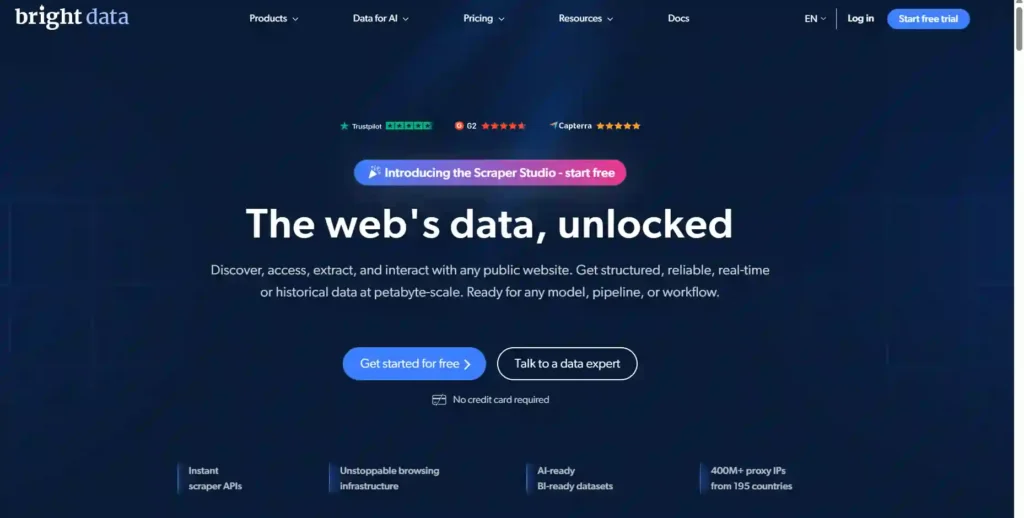
Bright Data stands as one of the most established names in the proxy industry, built for teams that need scale, precision, and reliability at once. Its network spans over 400 million residential IPs across 195 countries, giving US-based projects deep coverage down to specific states and cities.
What sets Bright Data apart is control. Users can target locations with precision, switch between residential, ISP, and datacenter proxies, and manage everything through a built-in Proxy Manager. Backed by 99.99% uptime and a 99.95% success rate, it handles high-volume scraping, ad verification, and account management without breaking under pressure. For businesses that treat proxy infrastructure as mission-critical, Bright Data delivers enterprise-grade dependability.
Pros and Cons
Pros:
- Massive 400M+ residential IP network.
- Covers 195 countries, all US states.
- Industry-leading 99.99% uptime rate.
- Full proxy management dashboard included.
Cons:
- Pricing sits on the higher side.
- Steeper learning curve for beginners.
Pricing: Plans start from $2.5/GB for residential proxies and $0.9/IP for datacenter, with tiered options scaling by usage and business size.
Best for: Enterprises and high-volume scrapers needing scale, precision, and rock-solid reliability.
2. Oxylabs — Best Premium Proxy Provider for Enterprise Scraping
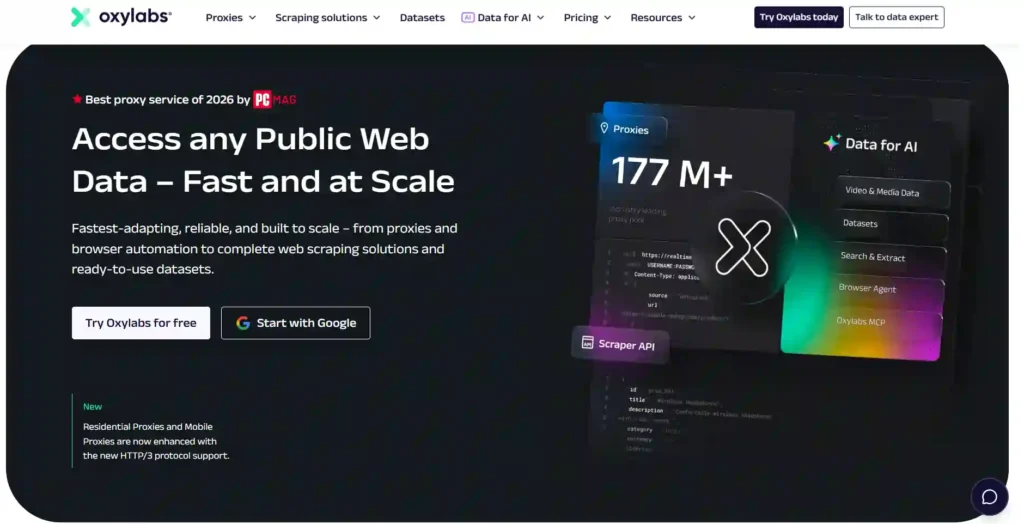
Oxylabs has built a reputation as one of the most trusted names in the proxy space, recognized by PCMag as a best proxy service and backed by a strong G2 leader standing. Its network includes over 175 million residential IPs and 2 million datacenter IPs across 188+ countries, giving US-focused projects wide, reliable coverage.
What makes Oxylabs stand out is speed paired with precision. With sub-second response times and a 99%+ success rate, it handles demanding scraping tasks, market research, and ad verification without frequent blocks.
Add in dedicated ISP proxies, a headless browser tool, and easy integration across Python, Node.js, and other languages, and it becomes a solid pick for teams that need dependable performance at scale.
Pros and Cons
Pros:
- 175M+ ethically sourced residential IPs.
- Sub-1-second average response speed.
- 99%+ public data retrieval success rate.
- Free trial available on select products.
Cons:
- Premium pricing on residential plans.
- Advanced tools need setup time.
Pricing: Residential proxies start from $2.5/GB, datacenter from $0.7/IP, with flexible tiers for growing scraping needs.
Best for: Enterprises needing fast, high-success proxies for large-scale scraping tasks.
3. Webshare — Best Budget US Proxy Provider
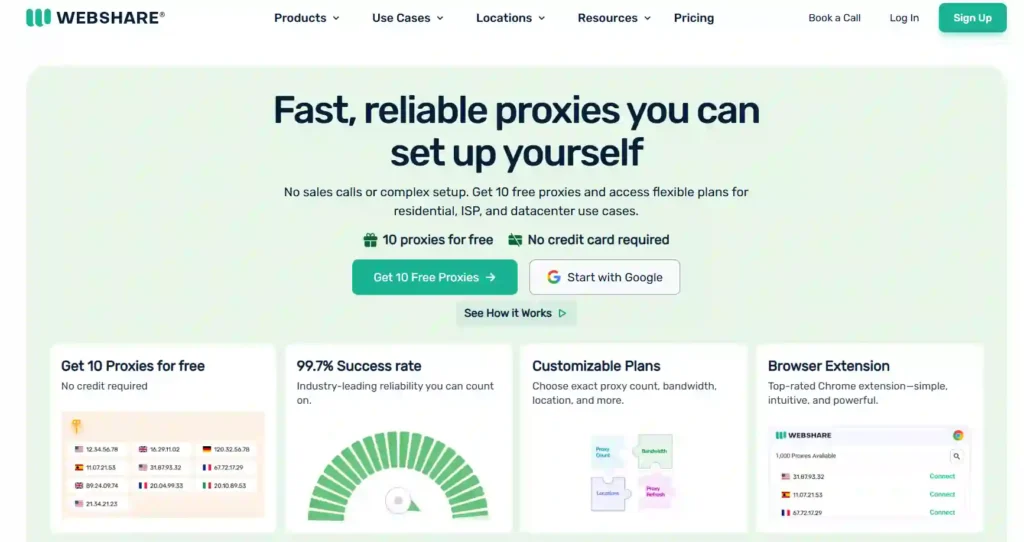
Webshare stands out as the go-to option for people who want quality proxies without a heavy price tag. With over 80 million IPs across 195 countries, including 6.6 million US-based IPs, it covers scraping, automation, and browsing needs at a fraction of typical industry cost.
What makes Webshare appealing is accessibility. New users get 10 free proxies with no credit card required, plus a self-service dashboard, browser extension, and clear API docs.
Backed by a 99.7% success rate and 24/7 expert support, it’s built for solo developers, small teams, and growing businesses that need reliable performance without enterprise-level spending.
Pros and Cons
Pros:
- 10 free proxies, no card needed.
- 80M+ IPs across 195 countries.
- Extremely affordable starting pricing.
- Self-service dashboard and browser extension.
Cons:
- Less suited for enterprise-scale needs.
- Fewer advanced tools than premium rivals.
Pricing: Plans start free for 10 proxies, with paid tiers from $2.99/month scaling by proxy count and type.
Best for: Budget-conscious users needing solid, self-managed US proxies fast.
4. IPRoyal — Best US Proxy Provider for Flexible, Pay-As-You-Go Plans
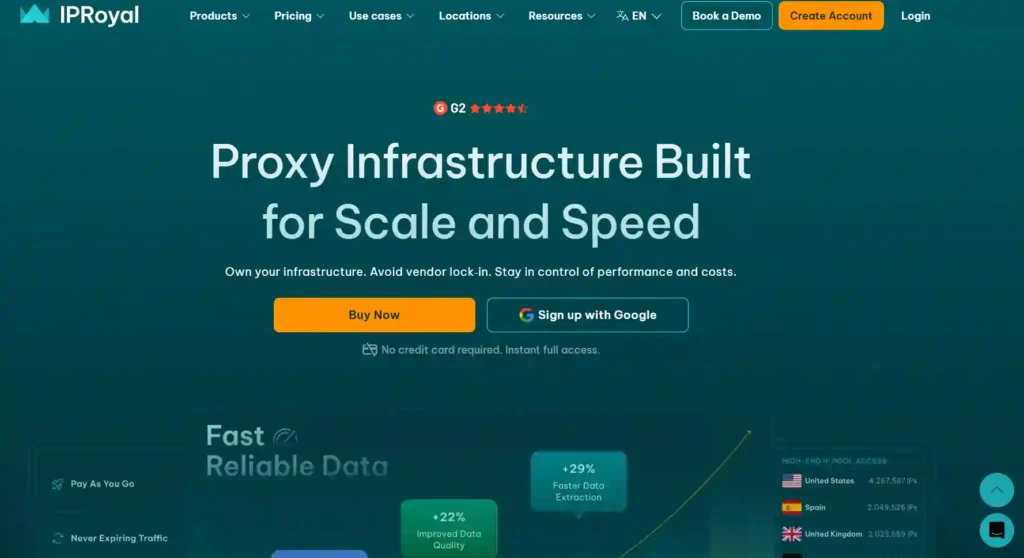
IPRoyal has earned recognition from outlets like TechRadar, PCMag, and CNBC for offering proxy infrastructure that balances flexibility with genuine ownership. Its network includes over 3.4 million US residential IPs, backed by non-expiring traffic and transparent, usage-based pricing that avoids vendor lock-in.
What makes IPRoyal appealing is control without complexity. Users get residential, ISP, datacenter, and mobile proxies, all with city and state-level geo-targeting, 650+ tool integrations, and a powerful API. With a 95%+ success rate across large-scale testing and 99.9% uptime, it handles SERP tracking, price monitoring, and ad verification without friction.
Pros and Cons
Pros:
- Non-expiring traffic, no data waste.
- Pay-as-you-go with no contracts.
- 650+ third-party tool integrations.
- City and state-level geo-targeting.
Cons:
- Smaller network than top rivals.
- Interface has a learning curve.
Pricing: Residential proxies start from $1.75/GB, datacenter from $1.39/proxy, with flexible plans built around real usage.
Best for: Users needing flexible, ownership-friendly pricing without long contracts.
5. NodeMaven — Best Quality-Filtered US Proxy Provider for Account Management
NodeMaven takes a different approach from most proxy providers by prioritizing IP quality over sheer network size. With over 30 million pre-filtered residential IPs and a 99.4% business success rate, it screens out blacklisted addresses before assigning them, something most competitors skip entirely.
What makes NodeMaven stand out is its quality-first filtering system, sticky sessions lasting up to 24 hours, and ZIP-level targeting across 150+ locations, including strong US coverage. Backed by a 95% clean IP rate and under 5/100 fraud risk score, it performs well for multi-account management, automation, and scraping on strict platforms like Amazon and Shopify.
Pros and Cons
Pros:
- Advanced real-time IP quality filtering.
- Sticky sessions up to 24 hours long.
- ZIP-level targeting in 150+ locations.
- Cashback rewards on used bandwidth.
Cons:
- Smaller pool than largest rivals.
- Premium pricing for filtered quality.
Pricing: Residential proxies start from $2.20/GB, with fixed monthly plans and cashback on usage.
Best for: Multi-accounting and automation needing clean, low-risk US IPs.
6. Apify— Best Web Scraping Platform for Automated, Scalable Data Extraction
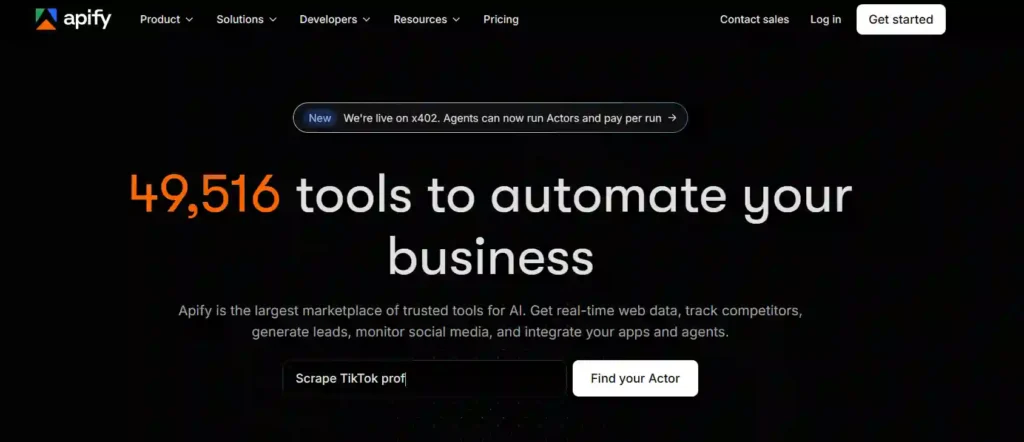
Apify stands apart from traditional proxy providers by pairing proxy access with a complete scraping and automation platform. Instead of just selling IPs, it offers datacenter and residential proxies alongside 53,868+ ready-made tools, making it a strong pick for teams that need proxies plus the infrastructure to actually use them.
What makes Apify appealing is convenience. Users get pay-as-you-go proxy pricing, SERP proxy access, and seamless integration with Python, JavaScript, and popular scraping libraries like Playwright and Scrapy. Backed by 99.95% uptime and SOC2, GDPR, and CCPA compliance, it suits developers building scraping workflows rather than buying raw IPs alone.
Pros and Cons
Pros:
- Proxies bundled with scraping tools.
- Pay-as-you-go, no long contracts.
- Strong developer and API support.
- SOC2, GDPR, CCPA compliant platform.
Cons:
- Not a pure standalone proxy service.
- Costs add up with heavy usage.
Pricing: Datacenter proxies start from $0.6/IP, residential from $7/GB, alongside flexible platform plans.
Best for: Developers needing proxies built into a full scraping platform.
7. Zyte — Best US Proxy Provider for Automated, Ban-Free Data Extraction
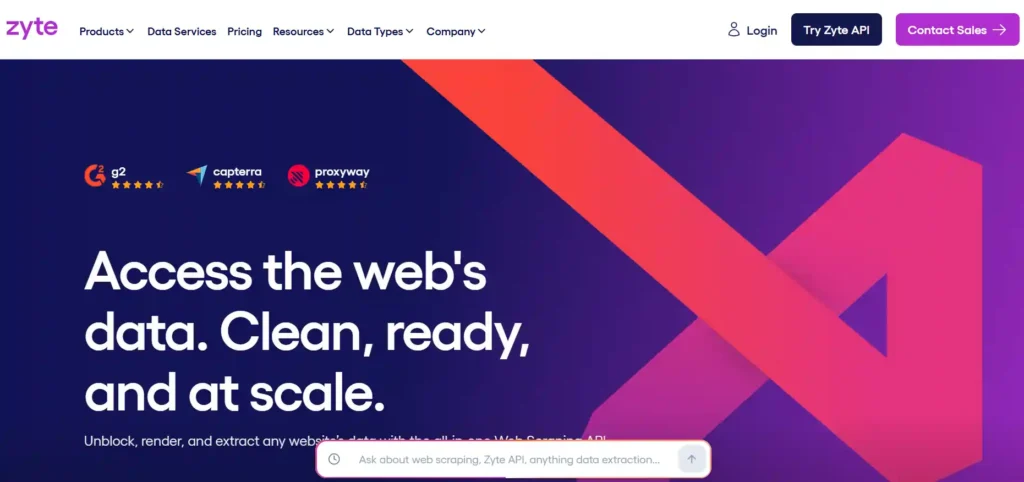
Zyte brings over 15 years of web data expertise into a single automated API, combining residential, datacenter, and mobile proxy rotation with built-in ban handling. Instead of managing raw IPs manually, users get automatic anti-bot bypassing, making it a strong fit for teams focused on outcomes over infrastructure.
What makes Zyte stand out is its all-in-one approach. Every plan includes JavaScript rendering, CAPTCHA solving, session management, and geo-targeted requests, backed by patented AI and legal compliance leadership in web data extraction. It’s built for businesses that need clean, structured US data without fighting blocks or building scraping logic from scratch.
Pros and Cons
Pros:
- Automatic CAPTCHA and ban handling.
- All features included, no restrictions.
- Sub-100ms low-latency response times.
- Strong legal compliance reputation.
Cons:
- Priced per response, not flat proxy fee.
- Overkill for simple proxy-only needs.
Pricing: Starts from $0.06 per 1,000 responses, with tiered plans based on monthly commitment.
Best for: Teams needing automated, ban-resistant data extraction over raw proxies.
What to Look for in a US Proxy Provider
Not all US proxy providers offer the same quality, coverage, or reliability. Knowing what to check before committing helps you avoid wasted money and blocked requests.
Here are the key factors worth comparing:
- Network size – the total number of unique US IPs available.
- State and city coverage – whether the provider offers granular, location-specific targeting.
- Proxy types offered – residential, datacenter, ISP, or mobile options.
- Speed and success rate – how consistently the proxy connects without failure.
- Free trial access – whether you can test performance before paying.
- Pricing flexibility – pay-as-you-go plans versus fixed monthly commitments.
- Customer support – availability and responsiveness when issues come up.
Providers that score well across most of these categories tend to perform better for demanding tasks like scraping or automation. Providers that fall short in one or two areas may still work fine for lighter, occasional use.
The next section breaks down how pricing and free trials actually compare across top US proxy providers.
US Proxy Providers: Free Trial and Pricing Comparison
Pricing varies significantly across US proxy providers, depending on proxy type, network size, and billing structure. Understanding these differences upfront helps you avoid overpaying for features you won’t use.
Most providers fall into one of these pricing models:
- Pay-as-you-go – billed by data usage, ideal for unpredictable or seasonal needs.
- Monthly subscription – fixed pricing with a set bandwidth or IP allowance.
- Tiered plans – pricing that scales with pool size, speed, or concurrent connections.
Free trials are common but not universal. Some providers offer a few days of limited bandwidth to test performance, while others require a paid plan from the start with a money-back guarantee instead.
Residential proxies typically cost more than datacenter proxies due to higher demand and limited availability. ISP and mobile proxies often sit in the middle, balancing cost with reliability.
Comparing trial length, refund policies, and per-GB pricing side by side gives a clearer picture of long-term value than monthly cost alone.
Residential vs Datacenter US Proxies — Which One Do You Need
Choosing between residential and datacenter proxies depends on what you’re trying to accomplish. Each type has clear strengths suited to different tasks.
Residential proxies use IP addresses assigned to real home internet connections. This makes them:
- Harder for websites to detect or block.
- Better suited for scraping, account management, and sneaker copping.
- Generally more expensive due to limited supply.
Datacenter proxies come from cloud servers rather than real households. They offer:
- Faster connection speeds.
- Lower cost per IP.
- Higher risk of detection on strict platforms
If your task involves navigating anti-bot systems, managing multiple accounts, or scraping data-sensitive sites, residential proxies usually perform better. For high-volume, low-risk tasks like basic browsing, testing, or content access, datacenter proxies offer solid value at a lower price.
Some providers also offer ISP proxies, which combine datacenter-level speed with residential-level trust, making them a middle-ground option worth considering.
Common Use Cases for US Proxy Providers
US proxy providers support a wide range of practical tasks across personal, business, and technical use cases. Understanding these applications helps clarify which proxy type and provider fit your specific needs.
Frequent use cases include:
- Web scraping – collecting pricing, product, or market data from US-based websites.
- Geo-restricted content access – unblocking US-only streaming platforms or services.
- Social media management – running multiple accounts without triggering location-based flags.
- Ad verification – confirming how ads display to users in specific US regions.
- Sneaker and retail copping – securing limited releases before they sell out.
- Market research – analyzing competitor pricing and product availability by location.
- SEO rank tracking – checking search results as they appear to US-based users.
Each use case has different requirements for speed, anonymity, and IP rotation. Scraping and account management typically demand residential proxies, while simpler tasks like content access work fine with datacenter options.
Matching your specific use case to the right proxy type makes a noticeable difference in performance and cost efficiency.
How to Choose the Right US Proxy Provider for Your Needs
Selecting a US proxy provider comes down to matching your specific task with the right combination of proxy type, network size, and pricing structure.
Start by identifying your primary use case. Scraping and account management benefit from residential proxies, while basic browsing or testing works well with datacenter options.
Next, consider these practical factors:
- Budget – pay-as-you-go plans suit unpredictable usage; subscriptions fit consistent, high-volume needs.
- Location precision – check if state or city-level targeting matters for your task.
- Scale – confirm the provider’s network size supports your request volume without frequent blocks.
- Support quality – reliable customer service matters when issues arise mid-project.
Testing a free trial, when available, offers the clearest picture of real-world performance before committing to a paid plan.
There’s no single “best” provider for everyone. The right one depends on balancing speed, cost, and reliability against what your specific project actually requires.
Frequently Asked Questions About US Proxy Providers
What is the best US proxy provider?
Bright Data and Oxylabs rank among the best overall, offering large residential networks, high success rates, and reliable US state and city-level targeting for most use cases.
Are US proxy providers legal to use?
Yes, using US proxy providers is legal in most countries. However, activities performed through them, like scraping or account automation, must comply with each website’s terms of service.
How much do US residential proxies cost?
US residential proxy pricing typically ranges from $1.75 to $8 per GB, depending on the provider, network size, and features like geo-targeting or dedicated IP options.
Do US proxy providers offer a free trial?
Some providers, like Webshare, offer free proxies or trial credits, while others provide money-back guarantees instead. Trial availability varies significantly across residential, datacenter, and ISP proxy types.
What’s the difference between residential and datacenter proxies?
Residential proxies use real home IP addresses, making them harder to detect. Datacenter proxies come from cloud servers, offering faster speeds but higher risk of getting blocked.
Which proxy type works best for web scraping?
Residential proxies generally perform best for scraping due to lower detection rates, especially on strict platforms like Amazon or social media sites requiring consistent, trustworthy IP behavior.
How do I choose the right US proxy provider?
Match your use case to proxy type, then compare network size, pricing structure, US city coverage, and customer support quality before committing to a paid plan.
Final Thoughts by Jan Nishu
Choosing the right US proxy provider comes down to matching your specific task with the right network, pricing, and support.
Bright Data and Oxylabs suit enterprise-scale scraping. Webshare and IPRoyal work well for budget-conscious users. NodeMaven fits account management, while Apify and Zyte serve developers needing built-in automation.
There’s no universal winner, only the provider best aligned with your goals.
Ready to get started? Compare a couple of these providers, test their free trials, and pick the one that fits your workflow best.
3 thoughts on “7 Best US Proxy Providers 2026: Tested for Speed & Uptime”