
Choosing a proxy provider looks simple until you start comparing them. Pricing models, IP types, and success rates vary widely, and a poor match can mean blocked requests, slow speeds, or wasted bandwidth.
The right choice depends on your task. Web scraping, ad verification, SEO tracking, and social media management each place different demands on residential, datacenter, and rotating proxies.
This list covers five supreme proxy providers worth considering. Each is assessed on IP quality, network coverage, pricing structure, and ease of use, so you can match a service to your own use case and budget.
What Are Supreme Proxy Providers and How Do They Work?
Supreme proxy providers are companies that sell access to large networks of proxy servers. A proxy sits between your device and a website. Your request goes to the proxy first, and the proxy sends it on using its own IP address instead of yours.
This hides your real IP and lets you appear to browse from another location, such as a US city or a UK region. It also spreads your requests across many IPs, which helps avoid blocks and CAPTCHAs.
Most providers offer four main proxy types:
- Residential proxies: IP addresses from real home internet connections. They look like normal users, so they are harder to block.
- Datacenter proxies: IPs from servers in data centers. They are fast and cheaper, but easier for websites to detect.
- ISP proxies: Static IPs hosted in data centers but registered to internet service providers. They combine speed with a more trusted appearance.
- Mobile proxies: IPs from mobile carrier networks. They suit tasks that need very high trust, such as social media management.
Providers also differ in how they rotate IPs, how they charge (per GB, per IP, or per request), and how precisely you can target a country, state, or city.
How We Chose the 5 Best Supreme Proxy Providers
A long IP list or a bold homepage does not make a provider good. We compared each option on factors that affect real results:
- IP quality and success rate: How reliably requests go through without blocks or CAPTCHAs.
- Speed and uptime: Response times and connection stability.
- Location coverage: Availability and targeting accuracy in the US and UK, plus other countries.
- Proxy types and rotation options: Residential, datacenter, ISP, and mobile support, with rotating and sticky sessions.
- Pricing and flexibility: Cost per GB or IP, pay-as-you-go plans, and any free trial or refund policy.
- Ethical sourcing and compliance: Whether the provider explains how its IPs are obtained.
- Ease of use and support: Dashboard clarity, documentation, and customer service availability.
Pricing and features change often, so we verify details against each provider’s official pages before publishing.
Free proxies were excluded. They tend to be slow, unreliable, and risky for your data, which is why this list covers paid services only.
The 5 Best Supreme Proxy Providers in 2026
| Supreme Proxy Provider | Proxy Types | Starting Price | Best For |
|---|---|---|---|
| Bright Data | Residential, ISP, Datacenter | From $2.5/GB | Large-scale data collection |
| Oxylabs | Multiple proxy types | From $2.5/GB | Enterprise teams |
| Webshare | Datacenter, ISP, Residential | From $2.99/month | Budget beginners |
| IPRoyal | Residential, ISP, Datacenter, Mobile | From $1.75/GB | Pay-as-you-go flexibility |
| NodeMaven | Residential, Mobile, ISP | From $2.20/GB | Clean IP quality |
1. Bright Data – Best Overall Among Supreme Proxy Providers
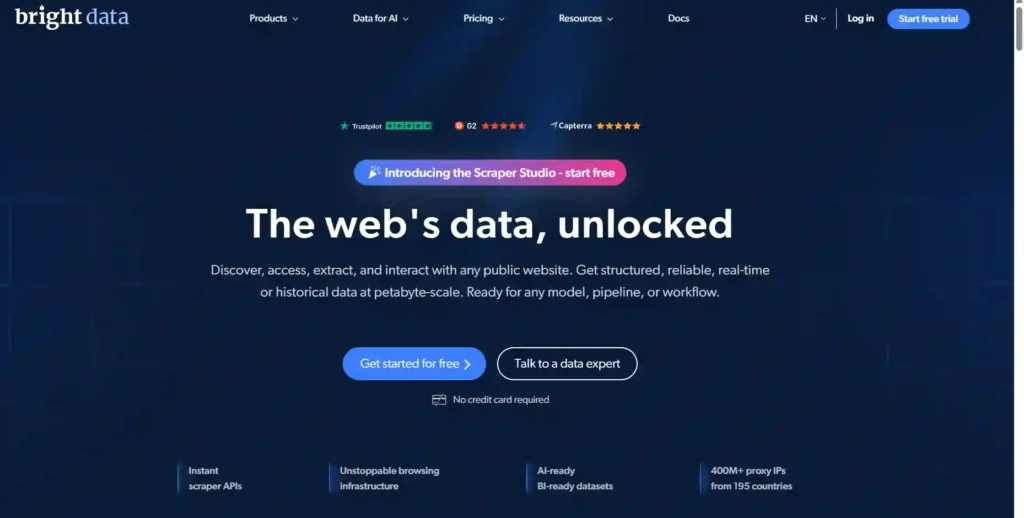
Bright Data is one of the most established supreme proxy providers for US and UK users who need reliable, large-scale web access. Its network covers 400M+ IPs across 195 countries, so you can target specific countries, cities, carriers, or ASNs.
You can choose residential, ISP, or datacenter proxies from one platform, with a built-in Proxy Manager and management APIs. That flexibility suits web scraping, price monitoring, ad verification, and SEO rank tracking.
Bright Data states that its network is ethically sourced and compliant with GDPR and CCPA, which matters for US and UK businesses. Support is available 24/7, and you can start with a free trial before committing.
Pros and Cons
Pros:
- Huge network of 400M+ IPs worldwide.
- Precise targeting by country, city, carrier, ASN.
- Residential, ISP, and datacenter proxies in one platform.
- 24/7 support with fast average response times.
Cons:
- Entry costs may be higher than budget providers.
- Many products can overwhelm first-time users.
Pricing Plans: Residential proxies start at $5/GB, listed at $2.5/GB with 50% off. ISP from $1.3/IP, datacenter from $0.9/IP. Free trial available.
Best For: Businesses and developers needing large-scale, reliable proxies for scraping and data collection
Ratings: 4.7/5 ★★★★★ (G2)
Why Choose Bright Data: Choose Bright Data for its massive global IP network, precise US and UK targeting, flexible proxy types, and round-the-clock support.
2. Oxylabs – Best Enterprise Pick Among Supreme Proxy Providers
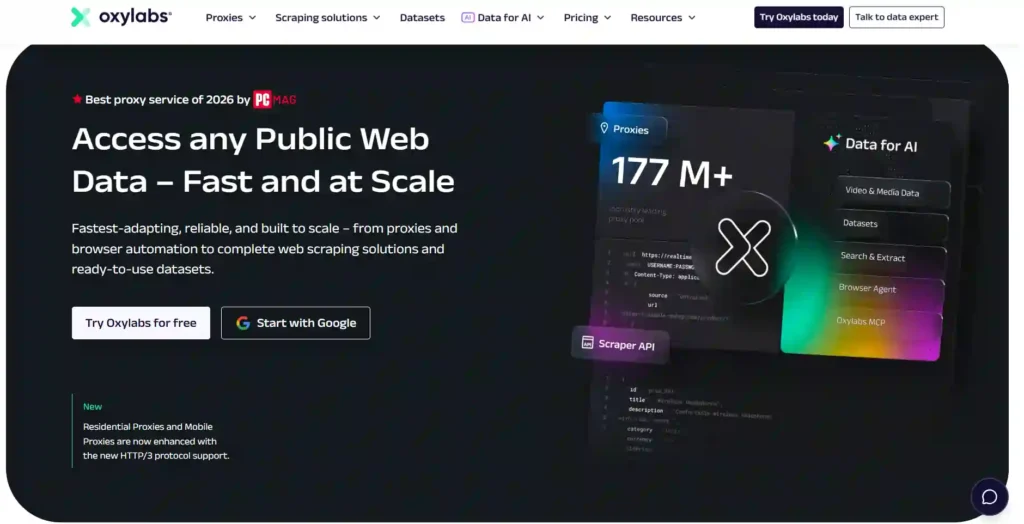
Oxylabs is a trusted choice among supreme proxy providers for US and UK businesses that need dependable, enterprise-grade web data access. Its proxy network includes 177M+ IPs, built to reach demanding targets reliably.
Beyond proxies, you get a Web API for search and scraping, browser automation, and ready-made datasets under one subscription. That makes it practical for SEO tracking, price monitoring, ad verification, and AI data workflows.
Oxylabs lists 15,000+ clients globally, including Stanford University, Forbes, and Trivago. It also supports MASQUE with HTTP/3 on residential proxies, and free credits let you test the service first.
Pros and Cons
Pros:
- Large network of 177M+ proxy IPs.
- One subscription covers all Oxylabs products.
- Web API combines search and scraping.
- Trusted by over 15,000 clients worldwide.
Cons:
- Enterprise focus may feel complex for beginners.
- Pricing details vary across many products.
Pricing Plans: Proxies start from $2.5/GB, Web API from $1 per 1K searches, Browser from $4/GB. One subscription includes free test credits.
Best For: Enterprises, developers, and data teams needing scalable proxies and AI-ready web data.
Ratings: 4.3 /5 ★★★★★
Why Choose Oxylabs: Choose Oxylabs for its 177M+ IP network, one-subscription access to every product, and enterprise-grade reliability trusted by 15,000+ clients worldwide.
3. Webshare – Best Budget Pick Among Supreme Proxy Providers
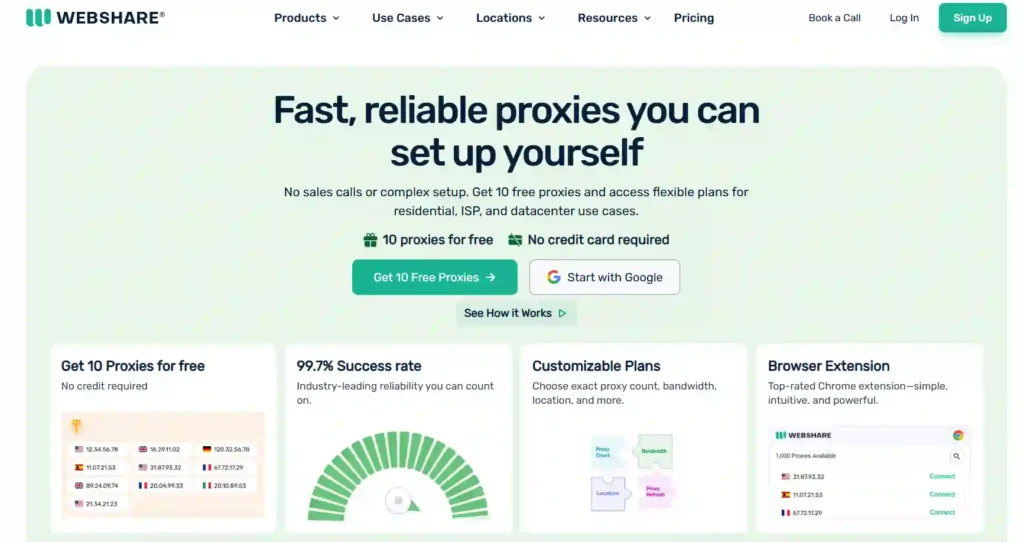
Webshare is a budget-friendly choice among supreme proxy providers for US and UK users who want to start without sales calls or complex setup. It offers a permanent free plan with 10 proxies, and no credit card is required.
You can choose datacenter, static residential, or rotating residential proxies, with country, city, state, or ZIP targeting. Its network lists 80M+ IPs across 195 countries, including over 6.6 million in the United States and 1.5 million in the United Kingdom.
Webshare also provides a Chrome extension, developer-friendly API docs, and 24/7 support. It works well for ecommerce, SEO, social media, and market research tasks.
Pros and Cons
Pros:
- Permanent free plan with 10 proxies.
- Customizable plans for proxy count and bandwidth.
- Strong US and UK IP coverage available.
- 99.7% success rate with 24/7 support.
Cons:
- Smaller network than Bright Data or Oxylabs.
- Datacenter IPs are easier for websites to detect.
Pricing Plans: Free plan with 10 proxies. Datacenter from $2.99/month, static residential from $6/month, rotating residential from $3.50/month. Yearly billing saves 30%.
Best For: Beginners, small businesses, and SEO or ecommerce users wanting affordable, flexible proxies
Ratings: 4.5 /5 ★★★★★
Why Choose Webshare: Choose Webshare for its permanent free plan, flexible pricing, strong US and UK coverage, and beginner-friendly setup without sales calls.
4. IPRoyal – Best Flexible Pay-As-You-Go Pick Among Supreme Proxy Providers
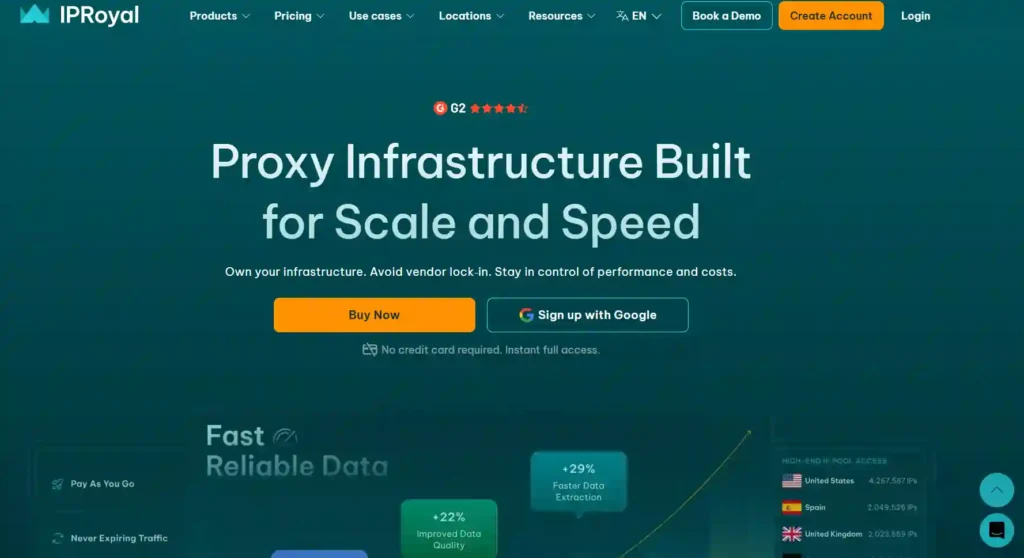
IPRoyal is a flexible choice among supreme proxy providers for US and UK users who want pay-as-you-go proxies without contracts. Its 64M+ residential pool includes over 3.4 million US IPs and 1.4 million UK IPs.
You can choose residential, ISP, datacenter, or mobile proxies, plus a Web Unblocker for blocked sites. City- and state-level geo-targeting makes it practical for SEO rank tracking, price monitoring, ad verification, and social media management.
Residential traffic never expires, so unused data is not lost. IPRoyal follows a strict KYC policy, supports 650+ integrations, and offers API-based ordering for teams that want automation.
Pros and Cons
Pros:
- Non-expiring residential traffic with no contracts.
- 64M+ residential IPs with city targeting.
- Residential, ISP, datacenter, and mobile proxies available.
- 650+ integrations plus a developer-friendly API.
Cons:
- Smaller network than Bright Data or Oxylabs.
- Mobile proxies cost more than other types.
Pricing Plans: Residential from $1.75/GB, ISP from $1.80/proxy, datacenter from $1.39/proxy, Web Unblocker from $1.00 per 1,000 requests. No contracts.
Best For: Budget-conscious freelancers, SEO professionals, and small teams needing flexible pay-as-you-go proxies
Ratings: 4. 3 /5 ★★★★★
Why Choose IPRoyal: Choose IPRoyal for non-expiring traffic, flexible pay-as-you-go pricing, strong US and UK coverage, and four proxy types under one account.
5. NodeMaven – Best for IP Quality Among Supreme Proxy Providers
NodeMaven is a quality-focused choice among supreme proxy providers for US and UK users who care more about clean IPs than raw pool size. It screens IPs in real time before assigning them, and says 95% of addresses are clean.
You can choose residential, mobile, or ISP proxies, with country, city, ISP, and ZIP targeting. Its network lists 30M+ residential IPs, including about 300,000 in the US and 200,000 in the UK. Sticky sessions last up to 24 hours.
That suits web scraping, multi-account management, automation, and AI agents. Cashback on used traffic, traffic rollover, and a low-cost trial help you test before scaling.
Pros and Cons
Pros
- Real-time IP filtering delivers cleaner, lower-risk addresses.
- Sticky sessions last up to 24 hours.
- Residential, mobile, and ISP proxies in one account.
- Cashback on used traffic plus traffic rollover.
Cons
- Smaller network than Bright Data or Oxylabs.
- No permanent free plan, only paid trial.
Pricing Plans: Residential and mobile proxies from $2.20/GB, ISP from $2.99/IP. Trial: $3.50 for 750MB of bandwidth. Cashback and traffic rollover available.
Best For: Multi-account managers, scrapers, and automation users needing clean, stable IPs
Ratings: 4.7/5 ★★★★★ (G2)
Why Choose NodeMaven: Choose NodeMaven for IP filtering, 24-hour sticky sessions, usage cashback, and clean residential, mobile, and ISP proxies across 190 countries.
Supreme Proxy Providers by Proxy Type: Residential vs Datacenter vs ISP vs Mobile
The proxy type matters as much as the provider. Each type trades off speed, cost, and how “real” the IP looks to a website. Here is how they compare, and which of our five supreme proxy providers offer each one.
| Proxy Type | Speed | Detection Risk | Relative Cost | Best For |
|---|---|---|---|---|
| Residential | Medium | Low | Medium-High | Scraping, SEO tracking, geo-targeted research |
| Datacenter | Very fast | Higher | Lowest | Speed-critical tasks and low-risk targets |
| ISP (static residential) | Fast | Low | Medium | Account management, ecommerce, long sessions |
| Mobile | Medium | Lowest | Highest | Social platforms, app testing, hard targets |
Residential proxies use IPs from real home connections, so websites treat them like ordinary visitors. They are the usual choice for web scraping and localized searches. Bright Data, Oxylabs, Webshare, IPRoyal, and NodeMaven all offer them.
Datacenter proxies come from servers rather than homes. They are fast and affordable, but easier to detect. They work well for testing, monitoring, and sites with light protection. Bright Data, Oxylabs, Webshare, and IPRoyal offer them.
ISP proxies are static IPs registered to internet service providers. You get near-datacenter speed with a more trusted look, and the same IP stays with you. Bright Data, Webshare, IPRoyal, and NodeMaven offer them.
Mobile proxies use IPs from mobile carrier networks, which websites trust heavily. They cost more but help on strict platforms. IPRoyal and NodeMaven both offer mobile proxies.
Quick rule: Start with residential for most scraping, choose ISP when you need one stable IP, and add mobile only when other types get blocked.
Best Supreme Proxy Providers by Use Case
Different tasks stress a proxy in different ways. Use these matches as a starting point, then check the provider’s current features before you buy.
Supreme Proxy Providers for Web Scraping and Data Collection
Scraping needs high success rates and good block handling. Bright Data adds an Unlocker API and scraper APIs, and Oxylabs offers a Web API for search and extraction. IPRoyal is a lower-cost pay-as-you-go option. For small projects, Webshare lets you test with its free proxies first.
Supreme Proxy Providers for SEO Rank Tracking
Rank tracking requires accurate local results from the US, the UK, or specific cities. Look for city-level targeting and stable residential IPs. Bright Data, IPRoyal, and Webshare each list SEO and SERP use cases and offer location targeting. Oxylabs also provides geo-targeted search results through its Web API.
Supreme Proxy Providers for Ecommerce and Price Monitoring
Price tracking means many repeat requests across regions. IPRoyal and Webshare both list price monitoring or ecommerce as use cases, and both have flexible plans that suit growing request volumes. Bright Data and Oxylabs suit larger catalogs. NodeMaven’s ISP proxies keep one stable IP for logged-in seller accounts.
Supreme Proxy Providers for Ad Verification and Social Media
These tasks need location-accurate, trusted IPs. IPRoyal lists ad verification as a use case. For social media and multi-account work, NodeMaven offers mobile and ISP proxies with 24-hour sticky sessions, and Webshare lists social media as a use case.
How to Choose the Right Supreme Proxy Provider
Ignore bold marketing and check these factors in order.
IP Quality, Pool Size and Success Rate
A big pool does not guarantee clean IPs. Ask how the provider filters addresses and whether it publishes success rates. Providers state their own numbers, so test a small plan on your real targets before scaling. NodeMaven puts IP filtering first, while Bright Data and Oxylabs compete on scale.
Speed, Uptime and Rotation Options
Check how the provider handles rotation and sticky sessions. Rotating IPs suit scraping. Sticky sessions suit logins and checkout flows. Look for stated uptime and a status page. Also check whether you can target your country, city, or ISP, which matters for US and UK campaigns.
Pricing, Free Trials and Flexibility
Compare per-GB, per-IP, and monthly pricing for your actual usage. Pay-as-you-go plans, traffic rollover, and free trials lower your risk. Webshare has a permanent free plan, NodeMaven has a paid trial, and IPRoyal offers non-expiring residential traffic.
Ethical Sourcing and Legal Considerations
Choose a provider that explains where its IPs come from and has a KYC or acceptable use policy. Using proxies is generally legal, but what you do with them must follow local laws and each website’s terms. For business use, check privacy and compliance information such as GDPR and CCPA support.
Supreme Proxy Providers: Frequently Asked Questions
Who is the best among supreme proxy providers?
Bright Data suits large-scale scraping, Oxylabs suits enterprises, Webshare suits beginners, IPRoyal offers flexible pricing, and NodeMaven focuses on clean IPs. The best depends on your use case.
Are residential proxies better than datacenter proxies?
Residential proxies look like real users, so they get blocked less. Datacenter proxies are faster and cheaper but easier to detect. Choose residential for protected sites, datacenter for speed.
How much do supreme proxy providers charge per GB?
Entry prices among these providers range from about $1.75 to $2.50 per GB, with Bright Data’s regular rate at $5. Prices change, so check each pricing page.
Do any supreme proxy providers offer a free trial?
Yes. Webshare offers a permanent free plan with 10 proxies. Bright Data lists a free trial, Oxylabs includes free test credits, and NodeMaven offers a $3.50 paid trial.
Is it legal to use a proxy provider?
Using proxies is generally legal in the US and UK, but illegal activity stays illegal. Follow local laws, data privacy rules, and each website’s terms of service.
What is the difference between rotating and static proxies?
Rotating proxies change your IP automatically, which suits scraping. Static proxies, like ISP proxies, keep one IP for stable logins and account management.
How do I choose among supreme proxy providers?
Check IP quality, success rate, US and UK location targeting, pricing, and support. Test a small plan or free trial on your real targets before committing.
Final Verdict by Jan Nishu
There is no single winner here, only the right fit for your task. Bright Data suits big scraping jobs. Oxylabs works for enterprise teams. Webshare is the easiest place to start, IPRoyal keeps pricing flexible, and NodeMaven focuses on clean IPs.
My advice: pick one use case, start small, and test it on your real targets before you commit to a bigger plan. Check each provider’s live pricing first, since offers change.
Ready to try? Start with Webshare’s free proxies, or explore Bright Data and the other supreme proxy providers above.