

Finding a proxy that actually returns a clean Mexican IP is harder than it sounds. Many services claim Mexico coverage but route traffic through shared or outdated pools, leading to blocks on sites like Mercado Libre or slow, unreliable connections during scraping and price monitoring.
This matters if you’re doing market research, ad verification, or e-commerce tracking in Mexico and need consistent access to local content. A good Mexico proxy provider offers real residential or datacenter IPs, stable uptime, and pricing that fits your usage, whether that’s occasional browsing or large-scale data collection.
Below are five providers worth considering, based on the type of proxies they offer, coverage across Mexican cities, and how well they suit different budgets and use cases.
What Is a Mexico Proxy and How Does It Work?
A Mexico proxy is a server located in Mexico that routes your internet traffic through a local IP address. Instead of connecting directly, your requests pass through this server first, so websites see a Mexican IP rather than your actual location.
This matters because many Mexican platforms, including Mercado Libre, Amazon Mexico, and local banking or streaming sites, show different content, pricing, or availability based on where a visitor appears to be located.
Mexico proxies come in a few main types:
- Residential proxies use IP addresses assigned by real Mexican internet providers, making them harder to detect.
- Datacenter proxies run on servers rather than home connections, offering faster speeds at a lower cost.
- Mobile proxies route traffic through Mexican mobile carrier networks.
Each type connects you to Mexico’s internet infrastructure differently, which affects speed, detection risk, and reliability for tasks like data collection or accessing local content.
Understanding these differences is the first step in picking a provider that actually fits your needs, which is what the next section breaks down.
Why Businesses and Marketers Use Mexico Proxy Providers
Businesses use Mexico proxy providers to access local data and content as if they were physically based in the country. This is essential for tasks that depend on accurate, region-specific information.
Common use cases include:
- Market research — viewing pricing, product availability, and promotions on sites like Mercado Libre or Walmart MX as a local shopper would see them.
- Ad verification — confirming that ads display correctly to Mexican audiences across platforms and regions.
- Competitor monitoring — tracking pricing and inventory changes on Mexican e-commerce sites without triggering blocks.
- SEO tracking — checking how websites rank on Google.com.mx from a Mexican IP.
- Brand protection — detecting counterfeit listings or unauthorized sellers targeting the Mexican market.
Marketers also rely on Mexico proxies to test how localized campaigns, geo-targeted ads, or region-specific landing pages actually appear to users in different Mexican cities.
Without a local IP, businesses risk working with incomplete or inaccurate data, since many Mexican platforms adjust what they show based on a visitor’s detected location.
This makes proxy selection more than a technical choice. It directly affects the quality of the data and insights a business collects.
Mexico Proxy Providers — Quick Comparison
| Provider | Best For | Starting Price | Key Feature |
| Oxylabs | Enterprise scraping | $2.5/GB | 175M+ residential IPs |
| Bright Data | Large-scale data | $2.5/GB | 400M+ global IPs |
| Webshare | Budget beginners | $2.99/month | Free 10 proxies |
| IPRoyal | Flexible pricing | $1.39/proxy | Non-expiring traffic |
| NodeMaven | Clean IP quality | $2.20/GB | Real-time IP filtering |
1. Oxylabs
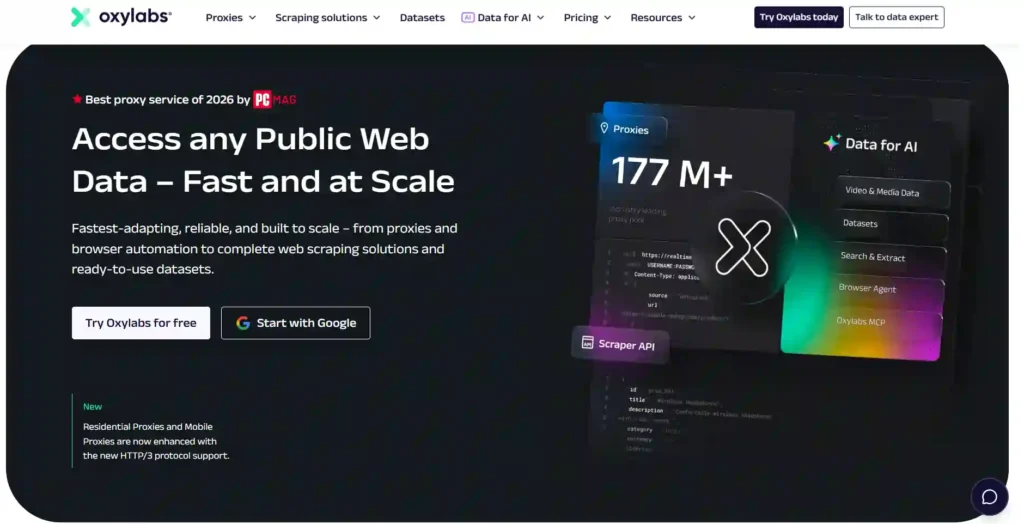
Oxylabs is one of the most established names in the proxy industry, offering residential, datacenter, mobile, and ISP proxies with coverage across Mexico. Its residential network draws from a pool of 175M+ ethically sourced IPs, giving businesses a wide range of Mexican IP addresses for tasks like e-commerce monitoring, ad verification, and market research.
Built for scale, Oxylabs supports high-volume scraping with a 0.25s response time and coverage across 188+ countries, making it a solid pick for businesses that need Mexico-specific data alongside global coverage. The platform also includes scraping tools and datasets, so companies handling more than basic IP rotation have room to scale without switching providers.
Pros and Cons
Pros:
- Large global residential IP pool.
- Multiple proxy types available.
- Fast average response speed.
- Trusted by major enterprise clients.
Cons:
- Premium pricing versus budget providers.
- Learning curve for advanced tools.
Pricing: Plans start at $2.5/GB for residential proxies and $0.7/IP for datacenter proxies, with free trial options on select products.
Why choose Oxylabs: Reliable infrastructure, broad proxy variety, and enterprise-grade scraping tools make it a dependable choice for serious Mexico-focused data projects.
2. Bright Data — Mexico Proxy Provider
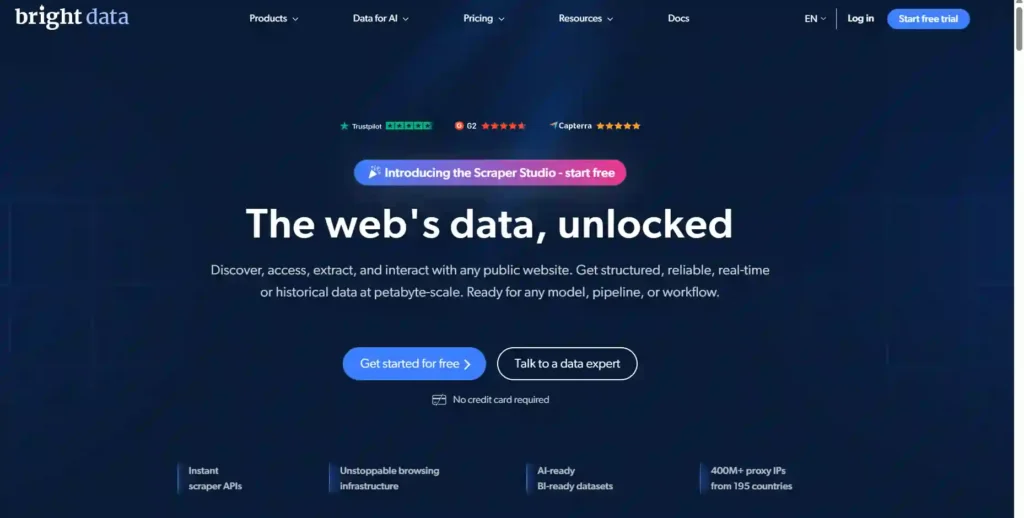
Bright Data runs one of the largest proxy networks available, with 400M+ residential IPs sourced from real peer devices across 195 countries, including Mexico. This scale makes it a strong option for businesses that need reliable Mexican IP coverage for e-commerce tracking, ad verification, or large-scale data collection.
Beyond proxies, Bright Data offers scraper APIs, pre-collected datasets, and an unlocker tool built to handle CAPTCHAs and anti-bot systems automatically. The platform emphasizes ethical sourcing, with every peer network member opting in and a dedicated compliance team monitoring regulatory changes, which adds a layer of trust for businesses handling Mexican market data at scale.
Pros and Cons
Pros:
- Massive global IP pool.
- Strong compliance and ethics standards.
- High uptime and success rate.
- Wide range of data tools.
Cons:
- Complex platform for beginners.
- Pricing scales quickly with usage.
Pricing: Residential proxies start at $2.5/GB (50% off), with datacenter plans from $0.9/IP and ISP proxies from $1.3/IP.
Why choose Bright Data: Unmatched network scale, strong compliance practices, and robust tooling make it ideal for enterprise-level Mexico data projects.
3. Webshare — Mexico Proxy Provider
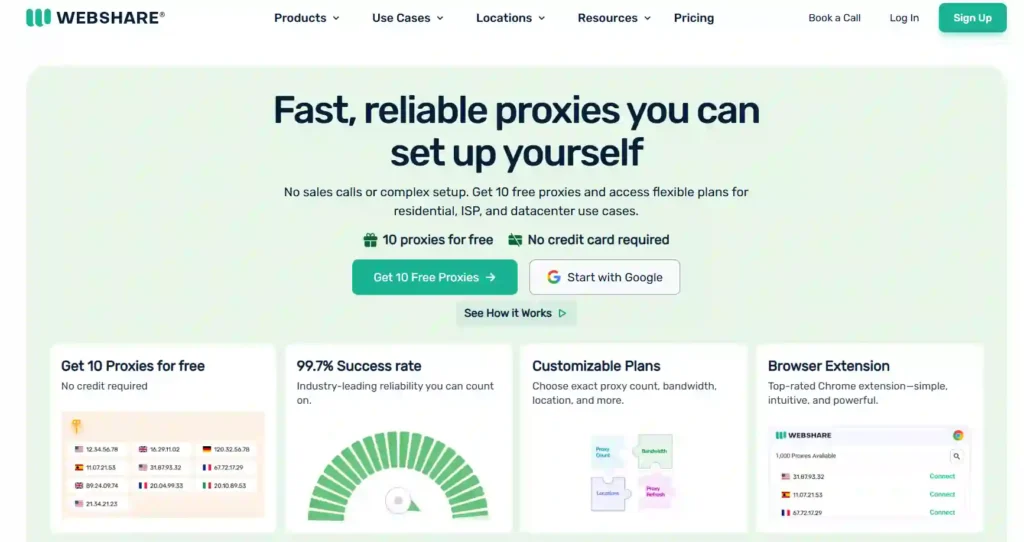
Webshare stands out for its self-serve setup and budget-friendly pricing, making it accessible for smaller teams and individual developers who need Mexican IP access without navigating sales calls. The platform offers datacenter, static residential (ISP), and rotating residential proxies, drawing from a pool of 80M+ global IPs across 195 countries, with country and city-level targeting available.
New users can start with 10 free proxies and no credit card required, testing performance before committing to a paid plan. Webshare also includes a browser extension, 24/7 expert support, and dev-friendly API documentation, which makes it straightforward to integrate into scraping tools, price monitoring setups, or SEO tracking workflows targeting the Mexican market.
Pros and Cons
Pros:
- Free tier available.
- Simple self-service setup.
- Flexible, scalable pricing.
- City-level location targeting.
Cons:
- Smaller IP pool overall.
- Fewer advanced enterprise features.
Pricing: Datacenter proxies start at $2.99/month, static residential from $6.00/month, and rotating residential from $3.50/month.
Why choose Webshare: Affordable plans, an easy setup process, and a free trial make it a practical starting point for smaller-scale Mexico proxy needs.
4. IPRoyal — Mexico Proxy Provider
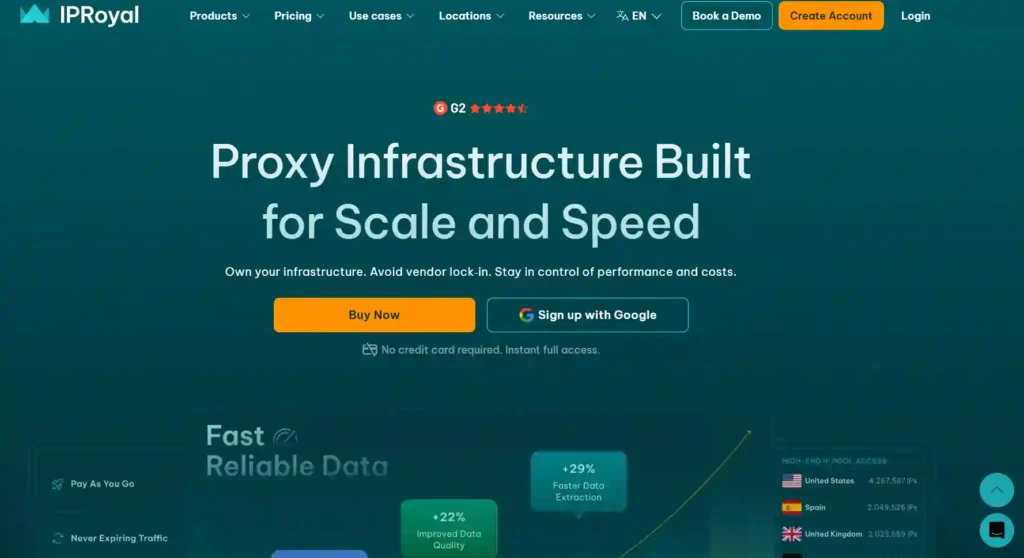
IPRoyal offers a full range of proxy types, including residential, ISP, datacenter, and mobile, backed by a 64M+ proxy pool with pinpoint city- and state-level geo-targeting. This makes it a flexible option for businesses running localized campaigns or testing geo-sensitive platforms in Mexico, from e-commerce price monitoring to SEO rank tracking.
The platform emphasizes value with non-expiring traffic and usage-based pricing, so businesses only pay for what they actually use. IPRoyal also supports 650+ third-party integrations and offers workspace controls, 2FA security, and detailed usage logs, which suit teams managing proxies across multiple projects or Mexican market data streams at once.
Pros and Cons
Pros:
- Non-expiring traffic data.
- Wide range of proxy types.
- Strong geo-targeting precision.
- Extensive tool integrations.
Cons:
- Smaller pool than top rivals.
- Mobile plans cost more.
Pricing: Residential proxies start at $1.75/GB, ISP from $1.80/proxy, and datacenter from $1.39/proxy.
Why choose IPRoyal: Flexible pricing, precise geo-targeting, and broad proxy variety make it a practical fit for cost-conscious Mexico data projects.
5. NodeMaven — Mexico Proxy Provider
NodeMaven takes a quality-first approach instead of chasing the largest IP count. Its 30M+ residential and mobile IPs are filtered in real time before assignment, which cuts down on blacklisted or flagged addresses that commonly cause failures on protected Mexican platforms and marketplaces.
The service supports ZIP-level targeting across 190+ countries, sticky sessions up to 24 hours, and a low verified fraud risk score, making it well-suited for account management, ad verification, and scraping tasks that need consistent, trustworthy Mexican IPs. A cashback system on used bandwidth also helps offset costs for ongoing, high-volume usage.
Pros and Cons
Pros:
- Real-time IP quality filtering.
- ZIP-level geo-targeting.
- Long sticky session support.
- Cashback on usage.
Cons:
- Higher entry pricing tier.
- Smaller network than giants.
Pricing: Residential and mobile proxies start at $2.20/GB, with ISP proxies from $2.99/IP.
Why choose NodeMaven: Strict IP filtering and low fraud scores make it a strong pick when clean, reliable Mexican IPs matter more than raw pool size.
Types of Mexico Proxy Providers: Residential vs Datacenter vs Mobile
Mexico proxy providers typically offer three main proxy types, each suited to different tasks and budgets.
Residential proxies use IP addresses issued by real Mexican internet service providers. Because they resemble genuine household connections, they’re harder for websites to detect and block, making them a strong fit for scraping protected sites or accessing platforms with strict anti-bot measures.
Datacenter proxies run on servers rather than residential networks. They offer faster speeds and lower costs but are easier for websites to identify as non-residential traffic. They work well for tasks involving sites with minimal bot detection.
Mobile proxies route traffic through Mexican mobile carrier networks. Since these IPs are shared among many real mobile users, they carry a high level of trust and are rarely blocked, though they tend to cost more.
Some providers also offer static residential or ISP proxies, which combine a fixed IP address with the credibility of a residential connection.
Choosing between these types depends on your priorities: speed, cost, or the ability to avoid detection.
How to Choose the Right Mexico Proxy Provider for Your Needs
Choosing a Mexico proxy provider comes down to matching the service to your specific task, budget, and technical requirements.
Start by considering these factors:
- Proxy type — residential for stealth, datacenter for speed and cost, mobile for maximum trust.
- IP pool size — a larger pool reduces the chance of reused or flagged IPs.
- Geo-targeting precision — some providers allow city-level targeting (Mexico City, Guadalajara, Monterrey), which matters for localized research.
- Success rate and uptime — look for providers that publish these figures rather than vague claims.
- Pricing structure — pay-as-you-go plans suit occasional use, while subscription plans often work better for ongoing projects.
- Session control — rotating IPs suit scraping tasks, while sticky sessions help with logins or multi-step processes like bookings.
It also helps to check whether a provider offers a free trial or small starter plan, since this lets you test performance on your actual use case before committing.
The right choice ultimately depends on balancing detection risk, speed, and cost against what your project actually requires.
Is It Legal to Use a Mexico Proxy Provider?
Using a Mexico proxy provider is generally legal, both in Mexico and most other countries. Proxies themselves are legal tools used for legitimate purposes like market research, ad verification, and accessing region-specific content.
That said, legality depends on how the proxy is used, not the proxy itself. Using one to scrape publicly available data is typically fine. Using one to bypass paywalls, commit fraud, or access accounts without authorization is not.
Mexico’s data protection framework, the LFPDPPP (Federal Law on Protection of Personal Data Held by Private Parties), applies to how personal data is collected and processed. Businesses scraping data in Mexico should:
- Maintain a documented legal basis for data collection.
- Avoid scraping personal or sensitive data without justification.
- Keep records of cross-border data transfers when applicable.
Public catalog or pricing data generally carries lower legal risk than personal data. Still, rules can vary by platform, since many sites have their own terms of service regarding automated access.
Businesses handling large-scale data collection should consult a legal professional to confirm compliance with both Mexican regulations and the terms of the platforms they’re accessing.
Frequently Asked Questions
What is the best Mexico proxy provider in 2026?
Oxylabs and Bright Data lead for enterprise needs, while Webshare suits beginners and IPRoyal offers flexible pricing. The right choice depends on your budget and use case.
How much does a Mexico proxy cost?
Pricing typically ranges from $1.39 per IP for datacenter proxies to $3.75 per GB for premium residential proxies, depending on the provider and proxy type you choose.
Are Mexico residential proxies better than datacenter proxies?
Residential proxies use real Mexican ISP addresses, making them harder to detect and block. Datacenter proxies are faster and cheaper but easier for websites to flag as non-residential.
Can I use a free Mexico proxy for web scraping?
Free proxies work for small tests but are often shared, unreliable, and easily blocked. Paid Mexico proxy providers offer better success rates for consistent scraping or data collection.
Do Mexico proxies work for Mercado Libre and Amazon MX?
Yes, quality residential or ISP proxies with Mexican IPs let you access accurate pricing, availability, and localized listings on Mercado Libre, Amazon Mexico, and similar platforms without restrictions.
Is it legal to use a Mexico proxy provider?
Using proxies is legal for legitimate purposes like market research and ad verification. Misusing them for fraud or unauthorized access violates laws and most platforms’ terms of service.
Which Mexico proxy type is best for ad verification?
Mobile and residential proxies work best for ad verification, since they mimic real user connections and provide accurate insight into how ads display to actual Mexican audiences.
Final Thoughts by Jan Nishu
Choosing the right Mexico proxy provider comes down to matching your specific needs, whether that’s Oxylabs’ enterprise scale, Webshare’s beginner-friendly pricing, or NodeMaven’s clean IP quality. Each provider on this list brings something different to the table for market research, ad verification, or e-commerce tracking in Mexico.
Before committing, test a free trial or small plan to see how it performs on your actual use case. The best proxy is the one that reliably fits your workflow.
Ready to get started? Pick a provider above and start accessing accurate Mexican data today.
1 thought on “5 Best Mexico Proxy Providers 2026: Top 5 Compared & Tested”