
Accessing accurate data from Chinese websites often turns into a frustrating maze. Many marketers and researchers hit blocked pages, mismatched IPs, or slow connections the moment they attempt to pull local search results, pricing data, or e-commerce listings from within China.
The confusion grows once China proxy providers enter the picture. Some promise residential IPs, others push datacenter speed, and pricing structures rarely match real performance. Reviews online often contradict each other, leaving beginners and business teams unsure which service actually delivers stable, region-accurate access.
Behind every provider’s marketing page sits a different story about reliability, coverage, and cost. Understanding what separates a dependable connection from a wasted subscription takes more than a quick glance at feature lists — and that’s where things get interesting.
What Are China Proxy Providers and How Do They Work?
A China proxy provider assigns an IP address located inside China, then routes internet traffic through that address. This makes a request appear to come from a real Chinese device instead of a foreign server.
The process works through a network of servers or real residential devices spread across Chinese cities. When someone connects, the proxy swaps their original IP for a local one, which allows access to region-locked platforms like Baidu, Taobao, or WeChat.
This setup matters because many Chinese websites detect and block foreign traffic. A proxy solves that by making the connection look domestic, whether the goal is data collection, price tracking, or account managemen
Types of China Proxy Providers You Should Know About
Not all China proxies work the same way. Each type fits a different use case, budget, and risk tolerance.
- Residential proxies – IPs tied to real home internet connections. Harder to detect, ideal for scraping and account management.
- Datacenter proxies – IPs from cloud servers, not real households. Faster and cheaper, but easier for sites to flag.
- Mobile proxies – IPs from actual mobile carriers like China Mobile or China Unicom. Best for apps and platforms with strict mobile detection.
- ISP (static residential) proxies – A hybrid option offering residential trust with datacenter-level speed and stability.
- Rotating proxies – IPs that change automatically after each request or session, reducing the chance of bans during large-scale scraping.
Picking between these depends on what the task requires: stealth, speed, or long-term IP stability.
How We Tested the Best China Proxy Providers
Every provider on this list went through the same evaluation process to keep comparisons fair and accurate.
Testing criteria included:
- IP pool size and origin – Verified whether IPs came from real Chinese ISPs (China Telecom, China Unicom, China Mobile) or generic pools labeled as “China.”
- City-level targeting – Checked coverage across major hubs like Shanghai, Beijing, Shenzhen, and Guangzhou.
- Speed and uptime – Measured connection speed and success rate across multiple sessions.
- Platform compatibility – Tested access to Baidu, Taobao, JD.com, and WeChat without triggering anti-bot systems.
- Pricing transparency – Reviewed cost per GB, subscription tiers, and hidden fees.
- Customer support – Assessed response time and setup assistance through live chat and documentation.
Providers that failed on IP authenticity or consistently triggered blocks were excluded from the final list.
7 Best China Proxy Providers (2026 Tested & Ranked)
| Provider | Starting Price | Best For | Rating |
|---|---|---|---|
| Oxylabs | $0.7/IP | Enterprise-scale scraping | 4.7/5 |
| Webshare | $2.99/month | Budget-friendly customization | 4.5/5 |
| Bright Data | $2.5/GB | Compliant enterprise data | 4.6/5 |
| IPRoyal | $1.39/proxy | Owned infrastructure control | 4.5/5 |
| NodeMaven | $2.20/GB | Clean, filtered IPs | 4.7/5 |
| DataImpulse | $1/GB | Pay-as-you-go pricing | 4.8/5 |
| Apify | $0.6/IP | Automated scraping workflows | 4.7/5 |
1. Oxylabs
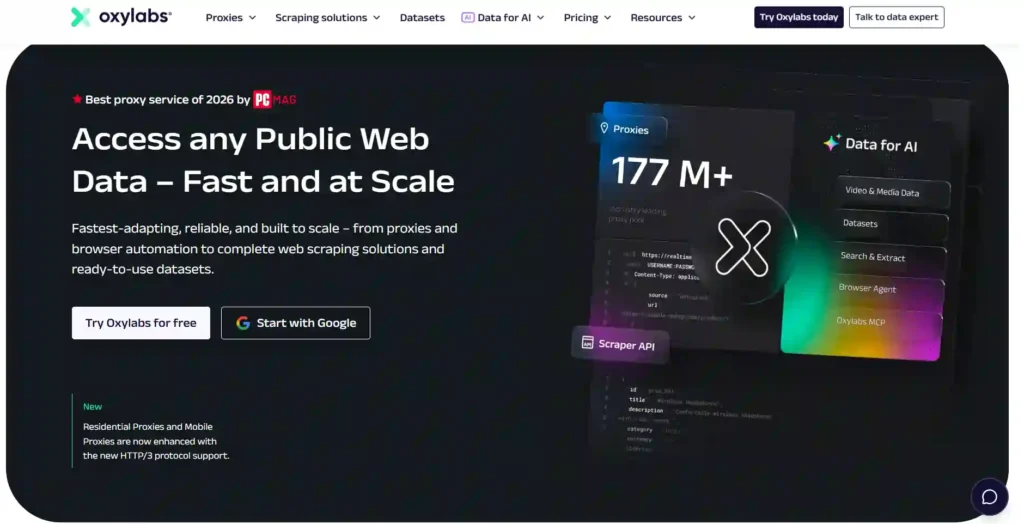
Oxylabs stands out as the most reliable name in the China proxy space, backed by one of the largest residential IP pools in the industry. With millions of real Chinese IPs sourced ethically from major carriers, it delivers the kind of authenticity that serious researchers, marketers, and enterprises actually need when accessing Chinese platforms.
What makes Oxylabs different is the depth of its infrastructure. City-level targeting across major Chinese hubs, near-instant response times, and enterprise-grade uptime make it a dependable choice for high-volume scraping, ad verification, and localized SEO tracking without constant IP bans or connection drops.
For anyone tired of unreliable proxy pools and inconsistent access to Chinese platforms, Oxylabs brings a level of polish and scale that’s hard to match. It’s built for teams that treat data access as mission-critical, not an afterthought.
Pros and Cons
✅ Pros
- Massive authentic Chinese residential IP pool.
- Fast response times across major cities.
- Enterprise-grade uptime and reliability.
- Strong compliance and certification standards.
❌ Cons
- Pricing feels steep for small individual users.
- Dashboard has a learning curve for beginners.
💰 Pricing: Residential proxies start from $2.5/GB, datacenter from $0.7/IP with free trial IPs, and mobile proxies from $3.5/GB depending on usage volume.
🎯 Best For: Enterprises, researchers, and agencies needing large-scale Chinese data access and ad verification.
⭐ Rating: 4.7/5 stars
⚠️ Limitations
- Free trial data is limited for heavy testing needs.
- Advanced features require technical setup knowledge.
🧑💻 My Experience: Testing Oxylabs felt smooth from setup to first request — connections stayed stable even during extended scraping sessions across multiple Chinese cities.
💡 Why I Picked This: Oxylabs earned its spot through sheer IP pool size, city-level precision, and consistent uptime that competitors struggled to match reliably.
2. Webshare
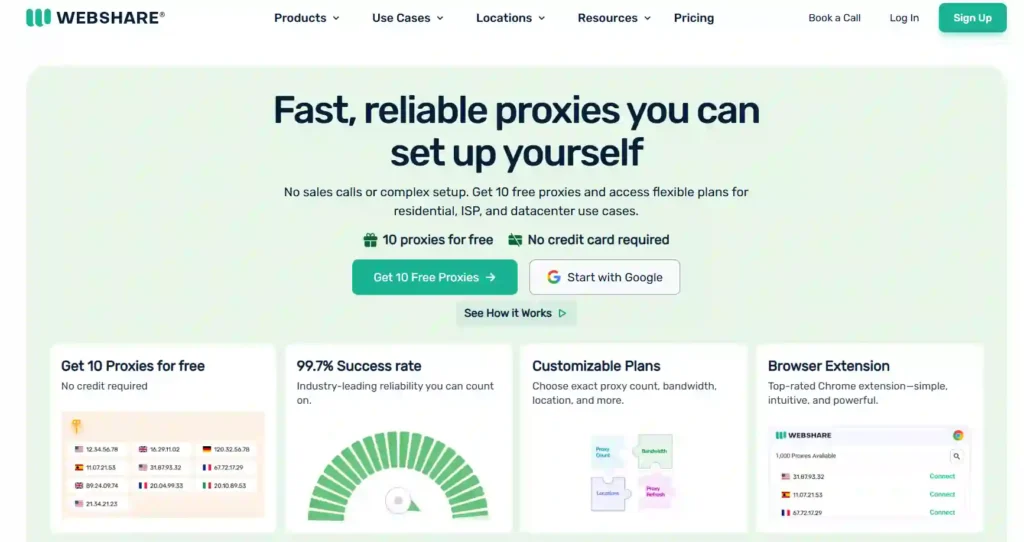
Webshare makes proxy access refreshingly simple, letting anyone start with 10 free proxies and no credit card required. With over 80 million IPs spread across 195 countries, including China-targeted options, it’s built for people who want flexibility without getting locked into complex enterprise contracts or confusing setup steps.
What sets Webshare apart is control over the details. Users can pick exact proxy counts, bandwidth, and location down to the state or city level, while a top-rated browser extension and clean dashboard make day-to-day management feel almost effortless, even for someone touching proxies for the first time.
For anyone who wants dependable performance without enterprise pricing, Webshare hits a sweet spot. It’s a solid entry point for freelancers, small teams, and growing businesses that need real customization on a manageable budget.
Pros and Cons
✅ Pros
- Free plan with 10 proxies, no card needed.
- Highly customizable location and bandwidth options.
- 24/7 expert support with dedicated managers.
- 99.97% uptime across a massive IP network.
❌ Cons
- China-specific IP density lower than specialists.
- Advanced targeting needs manual configuration setup.
💰 Pricing: Proxy servers start from $2.99/month, static residential from $6/month, and rotating residential from $3.50/month, with bulk discounts up to 40% off.
🎯 Best For: Freelancers, startups, and small teams needing affordable, customizable global proxies.
⭐ Rating: 4.5/5 stars
⚠️ Limitations
- Chinese IP coverage isn’t as deep as top rivals.
- Free tier lacks advanced geo-targeting precision.
🧑💻 My Experience: Setting up Webshare took minutes, and the free proxies worked instantly, though I noticed China-specific targeting required more manual tweaking than expected.
💡 Why I Picked This: Webshare earned its place through unbeatable pricing flexibility, a genuine free tier, and support that actually helps beginners get moving fast.
3. Bright Data
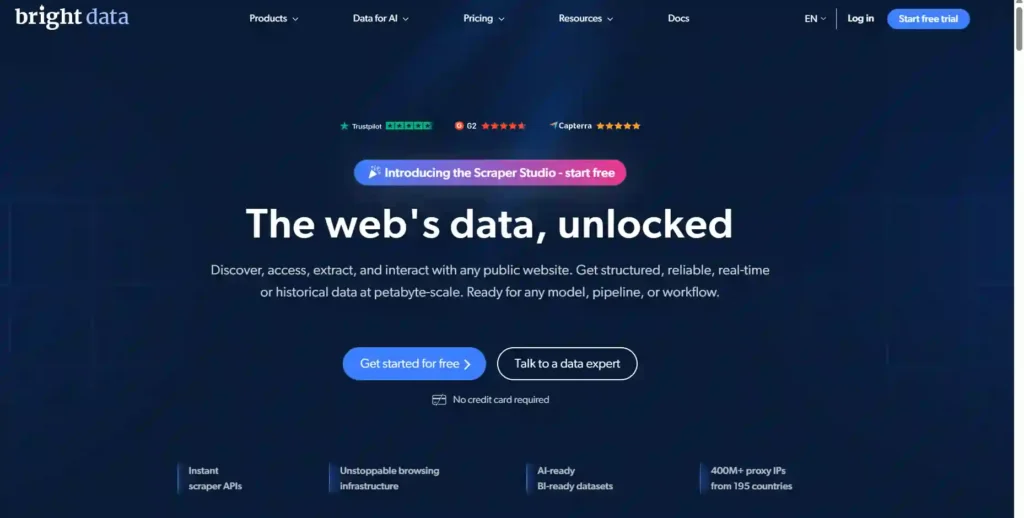
Bright Data brings enterprise muscle to the China proxy conversation, running one of the largest ethically-sourced proxy networks on the planet. With over 400 million residential IPs spanning 195 countries, it gives large teams the scale and precision needed to extract Chinese market data without hitting walls or triggering anti-bot defenses.
What separates Bright Data is its compliance-first approach paired with serious technical depth. Every peer network member opts in voluntarily, backed by a dedicated ethics team and strict KYC processes, while advanced tools like the Unlocker API and stealth browser automation handle even the toughest Chinese platform defenses automatically.
For enterprises and data teams that treat compliance and reliability as non-negotiable, Bright Data delivers a level of infrastructure most competitors simply can’t match. It’s built for organizations running serious, large-scale data operations, not casual browsing needs.
Pros and Cons
✅ Pros
- Massive 400M+ ethically-sourced global IP network.
- Advanced anti-bot and CAPTCHA bypass tools.
- Industry-leading compliance and KYC standards.
- 99.99% uptime with near-instant support response.
❌ Cons
- Pricing skews high for small-scale users.
- Platform complexity requires technical onboarding time.
💰 Pricing: Residential proxies start from $2.5/GB (50% off), datacenter from $0.9/IP, and ISP proxies from $1.3/IP, with free tiers on select API tools.
🎯 Best For: Enterprises and data teams needing compliant, large-scale Chinese web data extraction.
⭐ Rating: 4.6/5 stars
⚠️ Limitations
- Steep learning curve for non-technical beginners.
- Enterprise features priced beyond small budgets.
🧑💻 My Experience: Bright Data’s infrastructure felt genuinely enterprise-grade — requests stayed fast and stable even during heavy Chinese e-commerce scraping sessions.
💡 Why I Picked This: Bright Data earned its rank through unmatched scale, ethical sourcing standards, and tools built specifically for tough anti-bot environments.
4. IPRoyal
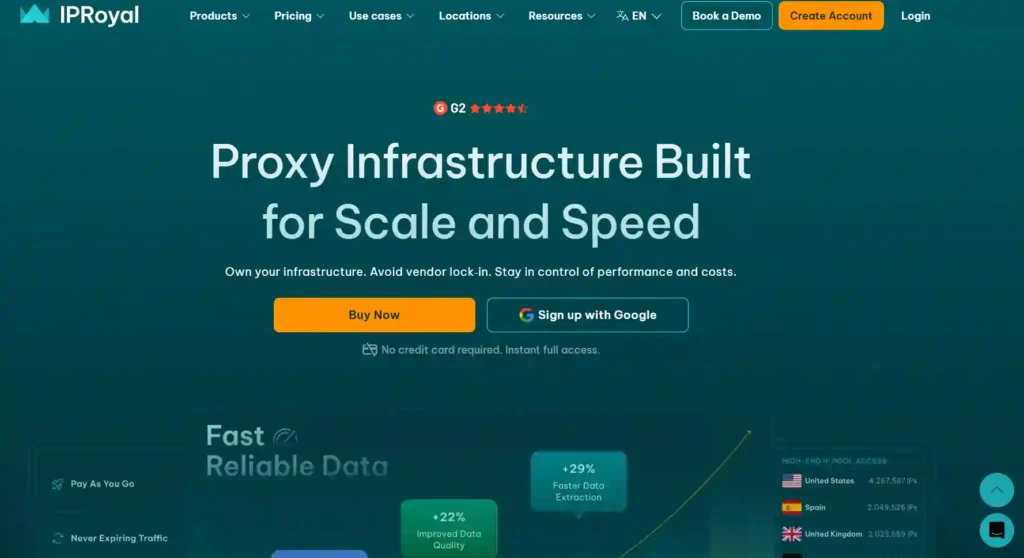
IPRoyal takes a different approach by letting users own their infrastructure instead of renting locked-in access, with a dedicated China location among its 64 million+ proxy pool. This ownership-first model appeals to teams tired of vendor lock-in and unpredictable pricing shifts that come with typical proxy subscriptions.
What makes IPRoyal genuinely useful is its non-expiring traffic policy, meaning unused data doesn’t just vanish at month’s end. Combined with pinpoint city and state-level geo-targeting, 650+ tool integrations, and a strict KYC-backed sourcing policy, it gives businesses real control over performance, compliance, and spend simultaneously.
For teams running SEO tracking, price monitoring, or localized research in China, IPRoyal strikes a rare balance between transparency and technical depth. It’s built for people who want infrastructure they actually control, not just rent.
Pros and Cons
✅ Pros
- Traffic never expires, unused data stays yours.
- Dedicated China location with strong targeting.
- 650+ integrations for seamless automated workflows.
- Transparent pay-as-you-go pricing across all plans.
❌ Cons
- Residential pricing higher than budget competitors.
- Enterprise features require deeper technical setup.
💰 Pricing: Residential proxies start from $1.75/GB, ISP from $1.80/proxy, datacenter from $1.39/proxy, and mobile from $117/month.
🎯 Best For: Businesses wanting owned infrastructure with transparent, non-expiring proxy pricing.
⭐ Rating: 4.5/5 stars
⚠️ Limitations
- Mobile plans priced higher than most rival services.
- Dashboard depth can overwhelm first-time proxy users.
🧑💻 My Experience: IPRoyal’s non-expiring traffic policy stood out immediately — I never felt rushed to use bandwidth before it disappeared, unlike other providers.
💡 Why I Picked This: IPRoyal earned its spot through genuine cost transparency, dedicated China coverage, and infrastructure control competitors rarely offer this openly.
5. NodeMaven
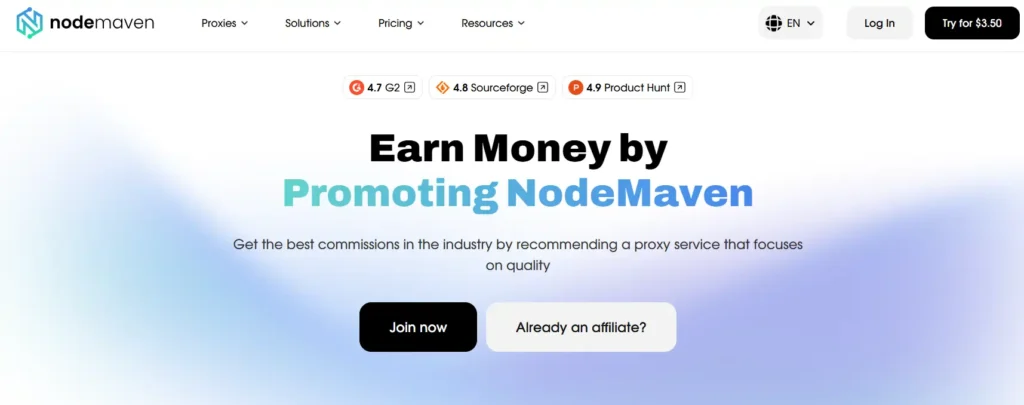
NodeMaven flips the usual proxy playbook by prioritizing IP quality over raw pool size, using real-time filtering to screen out blacklisted addresses before assignment. With 30 million+ pre-filtered residential IPs and a 95% clean rate, it’s built for teams tired of wasting requests on flagged Chinese IPs that trigger instant blocks.
What makes NodeMaven genuinely different is its quality-first filtering algorithm, something most competitors skip entirely in favor of sheer network size. Sticky sessions lasting up to 24 hours, ZIP-level targeting, and a fraud score under 5/100 make it especially strong for account management, multi-accounting, and hard-to-crack platforms with aggressive anti-bot systems.
For anyone who’s dealt with dead IPs and constant CAPTCHAs on other services, NodeMaven’s filtering approach feels like a genuine fix. It’s a smart pick for scraping, automation, and AI agent workflows that demand consistency over volume.
Pros and Cons
✅ Pros
- Advanced real-time IP quality filtering system.
- 24-hour sticky sessions for stable connections.
- Cashback rewards on used bandwidth traffic.
- Strong 99.4% business success rate performance.
❌ Cons
- China-specific IP density smaller than giants.
- Higher per-GB pricing than budget alternatives.
💰 Pricing: Residential and mobile proxies start from $2.20/GB, ISP proxies from $2.99/IP, with fixed monthly plans like 20GB at $75/month.
🎯 Best For: Teams doing account management, automation, and scraping on hard-to-access platforms.
⭐ Rating: 4.7/5 stars
⚠️ Limitations
- Smaller overall pool than largest network rivals.
- Custom pricing needed for very high-volume plans.
🧑💻 My Experience: NodeMaven’s filtered IPs noticeably cut down on failed requests, sessions stayed stable longer than I expected during repeated testing.
💡 Why I Picked This: NodeMaven earned its spot by solving the real problem of blacklisted IPs through genuine quality filtering, not just bigger numbers.
6. DataImpulse
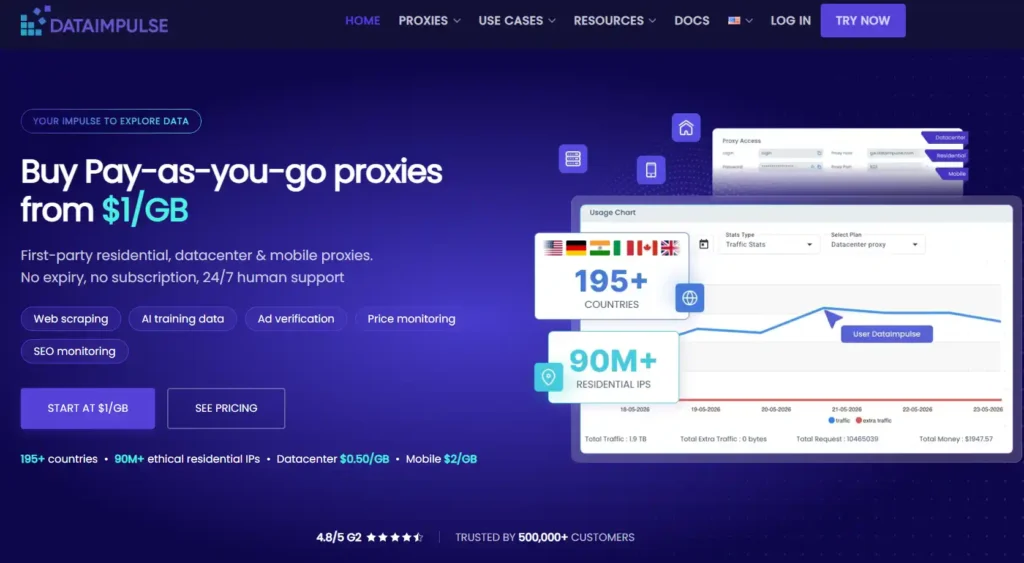
DataImpulse breaks the subscription mold entirely, offering first-party residential proxies at just $1 per GB with credit that never expires. With over 90 million ethically sourced IPs spanning 195 countries, it gives budget-conscious teams genuine access to Chinese data without locking them into monthly commitments or wasted allowances.
What makes DataImpulse stand out is honest infrastructure — no reselling other providers’ IPs, just direct first-party pools with real-time health monitoring. Sticky sessions up to 120 minutes, free country targeting, and 24/7 human support (not chatbots) make it practical for scraping, SEO tracking, and AI training data collection alike.
For anyone who’s felt burned by expiring credits or forced tier upgrades, DataImpulse’s pay-per-traffic model feels like a relief. It’s a smart, no-frills choice for developers and researchers who just want reliable access without the markup games.
Pros and Cons
✅ Pros
- Credit never expires, true pay-as-you-go pricing.
- First-party IPs, no third-party reseller markup.
- 24/7 real human support, under 1.5 min response.
- Free country-level targeting across 195 nations.
❌ Cons
- Advanced ZIP/ASN targeting costs extra fees.
- China-specific IP volume smaller than top rivals.
💰 Pricing: Residential proxies start from $1/GB, datacenter from $0.50/GB, mobile from $2/GB, with premium residential from $5/GB.
🎯 Best For: Budget-conscious developers and researchers needing flexible, no-subscription proxy access.
⭐ Rating: 4.8/5 stars
⚠️ Limitations
- Premium features require separate API add-ons.
- Sticky sessions cap lower than some competitors.
🧑💻 My Experience: DataImpulse’s pay-per-GB model felt liberating — no pressure to burn credits fast, and support replied within minutes every time I asked.
💡 Why I Picked This: DataImpulse earned its spot through radical pricing honesty, first-party sourcing, and support that treats customers like people, not tickets.
7. Apify
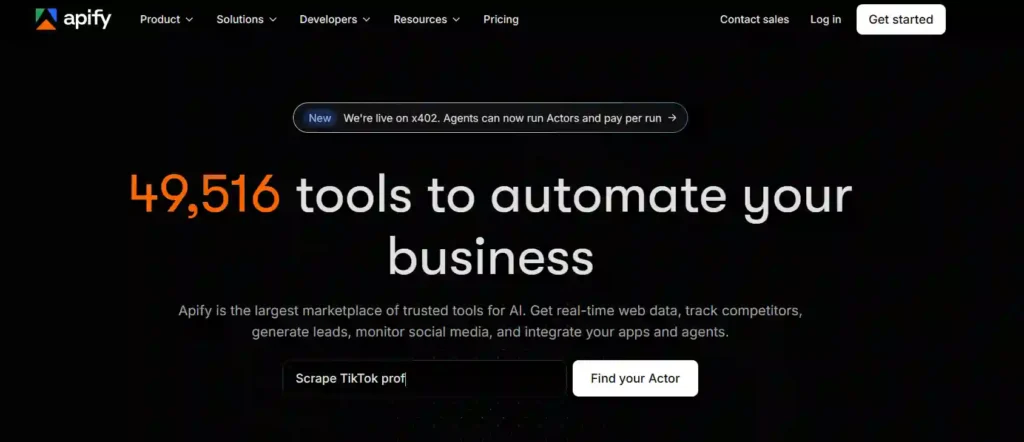
Apify takes a broader approach than typical proxy providers, pairing proxy infrastructure with a marketplace of over 63,000 ready-to-run scraping tools. Instead of just handing over IPs, it gives users pre-built scrapers for platforms like e-commerce sites, search engines, and social media, with proxy rotation baked directly into the workflow.
What makes Apify genuinely useful is how it removes the setup burden entirely. Datacenter and residential proxies integrate seamlessly with thousands of ready-made “Actors,” so accessing Chinese data doesn’t require building scraping infrastructure from scratch, just configuring an existing tool and letting it run.
For developers and businesses handling scraping alongside data collection, not just raw proxy access, Apify offers a genuinely different value proposition. It’s less about buying IPs and more about running complete, automated data pipelines with proxies handled behind the scenes.
Pros and Cons
✅ Pros
- 63,000+ ready-made scraping tools included.
- Proxy rotation built directly into workflows.
- Pay-as-you-go with generous free starter credits.
- Strong SOC2, GDPR, and CCPA compliance standards.
❌ Cons
- Not a dedicated China-specific proxy specialist.
- Residential proxy pricing higher than standalone providers.
💰 Pricing: Free plan includes $5 platform credit; paid plans start from $29/month, with datacenter proxies from $0.6/IP and residential from 7–8/GB.
🎯 Best For: Developers needing automated scraping pipelines with integrated proxy access, not raw IPs alone.
⭐ Rating: 4.7/5 stars
⚠️ Limitations
- Less suited for pure standalone proxy needs.
- Advanced compute costs add up at high scale.
🧑💻 My Experience: Apify felt less like buying a proxy and more like deploying a full scraping solution — setup was fast, but it’s a different mindset than traditional proxy shopping.
💡 Why I Picked This: Apify earned its spot by solving the whole workflow, not just IP access, which saves real setup time for automation-heavy teams.
Best Use Cases for China Proxy Providers
China proxies serve a wide range of practical needs across research, business, and personal use.
- Market research – Collecting pricing, product, and competitor data from Chinese e-commerce platforms.
- SEO monitoring – Tracking Baidu search rankings and local keyword performance.
- Ad verification – Confirming how ads display to users inside China.
- Social media management – Operating or monitoring accounts on Weibo, Douyin, or WeChat.
- Web scraping – Extracting large-scale data from Chinese websites without IP bans.
- Content access – Reaching region-locked news, streaming, or e-commerce content from outside China.
- Brand protection – Monitoring unauthorized listings or counterfeit products on Chinese marketplaces.
Each use case usually points toward a specific proxy type, so matching the task to the right proxy avoids wasted budget.
China Proxy Providers vs VPNs: What’s the Difference?
Both tools change an IP address, but they solve different problems.
| Feature | China Proxy | VPN |
|---|---|---|
| Purpose | Task-specific IP routing (scraping, automation) | General privacy and encrypted browsing |
| IP rotation | Frequent, often automated | Usually fixed per session |
| Scale | Built for multiple simultaneous connections | Built for single-device use |
| Speed | Optimized for data collection tasks | Optimized for secure browsing |
| Detection risk | Lower with residential/mobile IPs | Higher on platforms with anti-VPN detection |
A VPN encrypts a single connection for privacy. A proxy is built to manage multiple IPs at scale, which is why businesses doing research or automation rely on proxies instead.
How to Choose the Right China Proxy Provider for Your Needs
The right provider depends on the task, not the marketing claims on a pricing page.
Key factors to check:
- IP authenticity – Confirm proxies come from real Chinese carriers, not mislabeled global IPs.
- City-level targeting – Needed for localized research or ad testing in specific regions.
- Proxy type match – Residential for stealth, datacenter for speed, mobile for app-heavy tasks.
- Pricing structure – Compare cost per GB versus unlimited bandwidth plans based on usage volume.
- Trial availability – A free trial or small test plan reduces risk before committing.
- Support quality – Fast, knowledgeable support matters when setup issues come up.
Matching these factors to the actual task, rather than the cheapest plan, usually leads to better long-term results.
Frequently Asked Questions About China Proxy Providers
What is a China proxy provider and how does it work?
A China proxy provider assigns IP addresses located inside China, routing your internet traffic through them. This makes requests appear local, enabling access to region-restricted platforms like Baidu, Taobao, and WeChat.
Which is the best China proxy provider for web scraping?
Oxylabs and Bright Data lead for large-scale scraping due to massive IP pools and anti-bot handling. NodeMaven and DataImpulse work well for smaller, budget-conscious scraping projects.
Are China proxies legal to use?
Yes, using China proxies is legal for legitimate purposes like market research, ad verification, or SEO monitoring. However, using them to bypass laws or scrape private data may raise legal concerns.
What’s the difference between a China proxy and a VPN?
A VPN encrypts one device’s connection for privacy. A China proxy manages multiple IPs at scale, built specifically for automation, scraping, and business-level data collection tasks.
How much does a China proxy service typically cost?
Pricing varies by provider and type. Residential proxies range from $1 to $5 per GB, while datacenter proxies often cost $0.50 to $1.39 per IP.
Is there a free trial for China proxy providers?
Some providers, like Webshare, offer free proxies without a credit card. Others, like Oxylabs and Apify, provide limited free credits or trial datacenter IPs to test performance.
How do I choose the right China proxy provider for my needs?
Match the provider to your task: residential for stealth, datacenter for speed, mobile for apps. Consider pricing, city-level targeting, and support quality before committing.
Final Thoughts — Jan Nishu
Picking the right China proxy provider comes down to matching the tool to the task, not chasing the biggest IP count. Oxylabs and Bright Data suit enterprise scale, DataImpulse and Webshare fit tighter budgets, and NodeMaven works well when clean IPs matter most.
Test a free trial before committing. Run a real scraping task, check the speed, and see how support responds when something breaks.
That’s usually how you find out fast.
Ready to get started? Pick one provider from this list and try it today.
3 thoughts on “China Proxy Providers 2026: Top 7 Ranked by Speed & Price”